Digital transformation is changing how people interact with public institutions, access information, and participate in community initiatives. As cities become more connected, citizens increasingly expect public services to be accessible, responsive, and transparent.
Digital civic engagement platforms can help address these expectations by creating convenient channels for communication, collaboration, and participation. By bringing relevant information and civic interactions together, these platforms can help institutions strengthen relationships with the communities they serve.
The objective is not simply to move traditional services online. It is to create more meaningful connections between citizens and public institutions through accessible technology, better communication, and opportunities for informed involvement. 1. What Is Digital Civic Engagement?Digital civic engagement refers to the use of digital tools and platforms to help citizens interact with public institutions, access civic information, share feedback, and participate in community activities. Depending on their design, these platforms may support public announcements, consultations, feedback collection, community discussions, and access to relevant civic resources.
For public institutions, digital engagement can create additional channels for understanding community concerns and communicating information. For citizens, it can provide more convenient ways to stay informed and participate in civic life. Effective civic technology should complement existing engagement methods rather than exclude people who have limited internet access, digital skills, or access to suitable devices.
2. Improving Transparency and Access to InformationTransparency is an important foundation of public trust. When citizens can access clear and relevant information, they are better positioned to understand public initiatives, institutional priorities, and opportunities for participation.Digital platforms can help make information easier to find by bringing announcements, updates, and relevant resources into a more organized digital environment.
Consistent communication can also reduce confusion and help institutions explain changes, share progress, and respond to common questions. However, technology alone does not guarantee transparency. Information must be accurate, understandable, regularly updated, and accessible to different audiences. Clear policies governing public information and personal data are equally important. When these principles are followed, digital channels can support a more informed relationship between institutions and citizens.
3. Encouraging Meaningful Citizen ParticipationCommunity participation is most valuable when people have practical opportunities to express their views and contribute to discussions that affect them.
Digital civic engagement platforms can provide convenient channels for feedback, consultations, surveys, and community interaction. These tools may help institutions collect perspectives from a wider range of residents than traditional engagement methods alone. For example, a local authority could use digital consultations to gather community feedback on a proposed initiative before finalizing its plans.
The effectiveness of these activities depends on thoughtful implementation. Institutions should communicate the purpose of consultations, explain how feedback will be considered, and share appropriate updates on outcomes.Meaningful participation is not measured simply by the number of people using a platform. It also depends on whether citizens feel heard and whether engagement contributes to informed decision-making.
4. Strengthening Collaboration Between Institutions and CommunitiesPublic institutions and communities often need to coordinate around shared concerns, local priorities, and civic initiatives.Digital platforms can help facilitate this collaboration by making information easier to share and providing structured channels for communication. When institutions can better understand community feedback, they may be able to identify recurring concerns, recognize emerging priorities, and improve how they communicate with residents.
Similarly, citizens can benefit from clearer information about public initiatives and the appropriate channels for participation. Building effective collaboration requires more than deploying software. Institutions must establish clear communication processes, assign responsibility for responding to feedback, and ensure that digital interactions lead to appropriate follow-up.
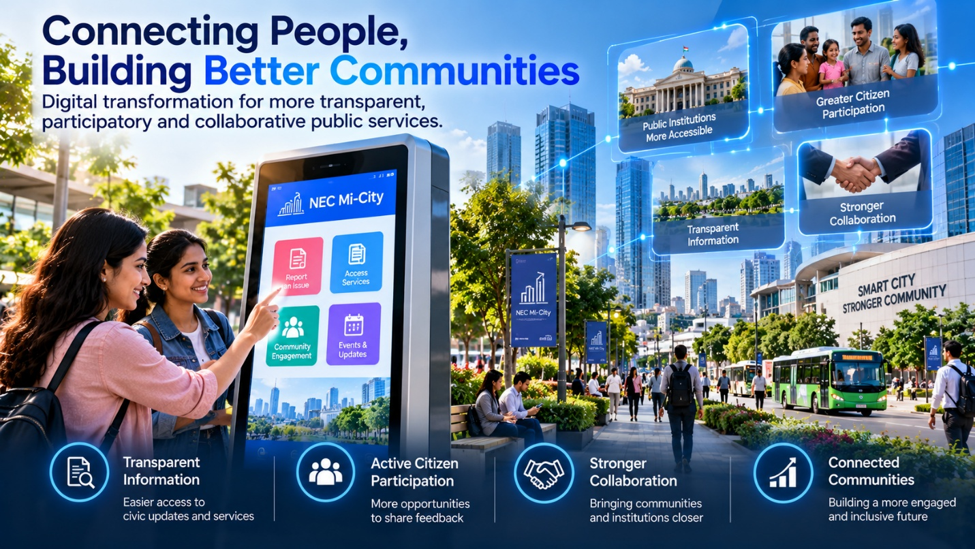
5. The Role of NEC Mi-City in Digital Civic ExperiencesNEC Mi-City brings together digital engagement and collaboration through a unified platform intended to foster stronger relationships between public institutions and the communities they serve. Its underlying proposition reflects a broader trend in digital governance: using technology to make civic interactions more connected, accessible, and participatory.
By creating a shared digital environment for relevant civic interactions, platforms of this kind can support more convenient communication and encourage informed community involvement. The actual capabilities and outcomes of any implementation depend on the platform's deployed features, institutional processes, accessibility, and local requirements. Explore how digital civic engagement platforms can contribute to more connected civic experiences through digital innovation.
6. Building Inclusive, Secure, and Future-Ready Civic PlatformsSuccessful digital transformation must consider the needs of diverse communities.
Platforms should be designed with accessibility, usability, data protection, cybersecurity, and responsible information management in mind. Clear privacy practices can help citizens understand how their information is handled, while inclusive design can make digital services easier to use.Institutions should also consider multilingual communication, support for people with different digital skill levels, and alternative access channels for residents who cannot use online services independently.
Measuring outcomes is another important step. Relevant indicators may include participation rates, response times, user satisfaction, accessibility, and the resolution of reported issues.These measures can help institutions identify areas for improvement and ensure that digital investments serve genuine public needs.
Conclusion: A More Connected Civic FutureDigital transformation creates opportunities to improve how citizens and public institutions communicate, collaborate, and participate in civic life. Digital civic engagement platforms can support greater access to information, encourage informed participation, and help institutions understand community needs more effectively.
Real progress, however, requires a combination of reliable technology, inclusive design, responsible data practices, transparent communication, and meaningful institutional follow-through.As cities continue to evolve, digital innovation can help create civic experiences that are more accessible, collaborative, and responsive to the people they serve.
How Digital Civic Platforms Improve Citizen Engagement
Digital transformation is changing how people interact with public institutions, access information, and participate in community initiatives. As cities become more connected, citi

Discussion 0
Sign in to join the discussion and earn speora points.
Sign in to comment