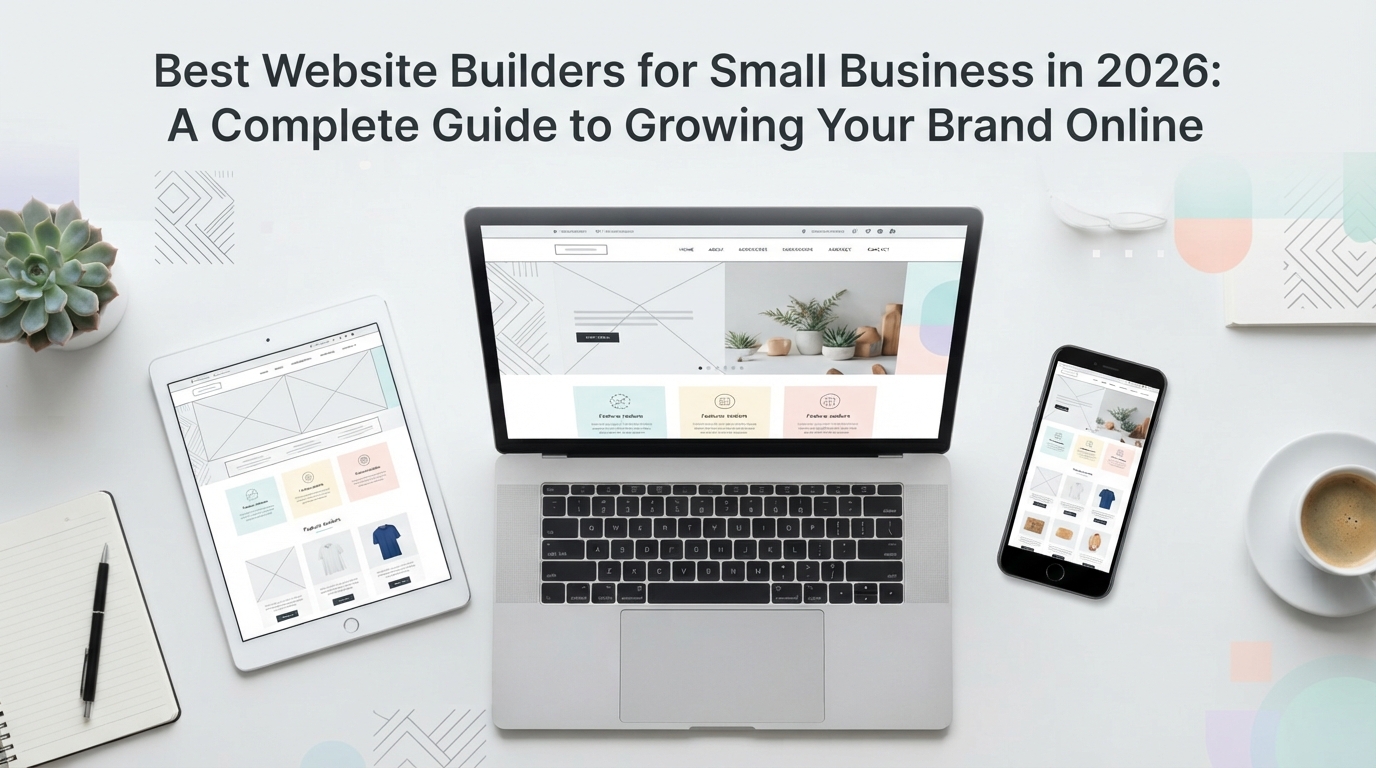
A business website is far more than a simple digital calling card it serves as the virtual front door to an entire brand. For small business owners, building meaningful relationships with buyers starts long before a phone call, email, or in-person handshake ever takes place. That journey begins online, where everyday shoppers browse, compare options, and form immediate opinions based strictly on a company’s digital presence. When a site looks outdated, loads slowly, or doesn't exist at all, a company risks losing valuable customers before even getting a chance to pitch its offerings. Choosing the right platform or knowing when to bring in website developers for small business ensures every visitor leaves with a strong, lasting impression.
Best Website Builders for Small Business at a Glance
Before diving deep into features and strategies, here is a quick overview of the top platforms leading the market in 2026:
Platform
Usability
Pricing
Key Features
Ideal Use Cases
Wix
Easy
$$
Drag-and-drop editor, expansive app market
Broad service industries (salons, restaurants, consultants)
Squarespace
Moderate
$$$
Artistic templates, built-in SEO tools
Creative businesses, photographers, portfolios
Shopify
Easy
$$$
Comprehensive ecommerce tools, sales analytics
Online retail, boutique stores, scaling brands
GoDaddy
Very Easy
$
One-click setup, integrated email marketing
Freelancers, solo entrepreneurs, local businesses
Hostinger
Easy
$
Multilingual support, AI builder, budget-friendly
Startups, growing businesses, international reach
The Role of Your Website in Business Success
First Impressions Matter A Lot
Think of a website as the digital equivalent of a physical storefront’s signage and window display. A clean, well-organized layout immediately signals professionalism, reliability, and genuine respect for the visitor's time. Conversely, landing on a page riddled with broken elements, sluggish graphics, and outdated details sends the opposite message. Consumer research consistently shows that 75% of shoppers judge a company’s credibility based purely on its website’s appearance and usability.
A thoughtfully crafted site reassures visitors they have arrived at the right place. It proves a business is legitimate and capable of delivering top-tier products or services. Everything from typography and color palettes to button placement shapes whether a visitor feels confident enough to make a purchase. Modern builders allow smaller companies to achieve sleek small business website design that rivals major corporations without draining their startup capital.
Functionality Fuels Customer Satisfaction
While visual appeal draws visitors in, smooth functionality is what keeps them around. Imagine clicking onto a local café's site to check lunch hours, only to hit dead links or wait endlessly for a heavy PDF menu to load. Frustrating experiences like these push potential buyers straight toward competitors.
Prioritizing functionality means giving every visitor a friction-free path from arrival to action. Intuitive navigation, rapid page speeds, and mobile-friendly layouts make everyday tasks like checking service rates, booking a consultation, or ordering online completely effortless. When a platform removes unnecessary hurdles, choosing that business becomes the natural decision.
Key Features to Look for in a Website Builder
Not every website platform is engineered with lean teams in mind. While most tools let users publish basic pages quickly, true long-term value comes from matching platform capabilities to real operational needs.
Ease of Use: Busy entrepreneurs juggling inventory, customer support, and accounting rarely have time to wrestle with complex code. Top platforms streamline site creation with visual drag-and-drop editors, onboarding walkthroughs, and AI-assisted layout tools that eliminate technical barriers.
Design Customization: Cookie-cutter templates make a brand blend into the background. Look for platforms that allow deep control over page structure, brand colors, custom logos, and interactive elements so the final site feels unmistakably unique.
SEO and Marketing Tools: Even the sharpest site won't generate revenue if nobody can find it. Built-in Search Engine Optimization (SEO) settings, blogging engines, email campaign integrations, and visitor analytics dashboards help small companies climb search rankings and convert casual readers into loyal buyers.
Mobile Responsiveness: With well over 60% of global web traffic originating from smartphones and tablets, mobile optimization is mandatory. Responsive frameworks automatically adapt text, images, and menus to fit any screen size seamlessly.
Ecommerce Tools: Companies planning to sell physical or digital goods need built-in shopping carts, secure payment processing, tax calculators, and inventory tracking right out of the box.
Scalability: A platform should support a business not just at launch, but three years down the road. Whether adding client portals, booking calendars, or international language support, upgrading should never require rebuilding from scratch.
Transparent Cost: Look beyond introductory monthly rates to evaluate domain renewals, transaction fees, and paid app add-ons. Investing slightly more upfront often prevents costly headaches later or helps owners decide if affordable web development for small businesses makes better financial sense than piecing together dozens of paid plugins.
The Best Website Builders for Small Business Compared
Selecting the right platform comes down to balancing budget, technical comfort, and day-to-day business goals. Below is a closer look at how the five standout options compare in 2026.
Wix
Wix remains one of the most versatile and approachable builders available. Its unstructured drag-and-drop editor gives business owners total freedom to place elements anywhere on the screen without touching a line of code. Paired with over 800 industry-specific templates and a massive app marketplace, Wix handles everything from restaurant reservations to class bookings with ease.
Pros: Extensive template library, beginner-friendly visual editor, massive selection of third-party plugins.
Cons: Advanced business features require higher-tier plans; limitless design freedom can occasionally overwhelm newcomers.
Best For: Service-based businesses like salons, fitness studios, restaurants, and event planners seeking polished functionality quickly.
Squarespace
Squarespace is widely celebrated for award-winning aesthetics and cohesive visual storytelling. Its minimalist, editorial-style templates make it a natural home for photographers, interior designers, and boutique brands where visual presentation directly drives sales.
Pros: Gallery-grade templates, strong built-in SEO and blogging tools, sleek mobile rendering.
Cons: Higher starting price than budget competitors; structured grid editor offers less freeform flexibility than Wix.
Best For: Creative professionals, artists, and design-forward brands looking to showcase portfolios or curated product lines.
Shopify
Shopify stands as the undisputed powerhouse for online retail. Built from the ground up for commerce, its unified dashboard centralizes product catalogs, multi-channel social selling, shipping labels, and deep customer analytics.
Pros: Unmatched ecommerce infrastructure, seamless omnichannel selling (Instagram, TikTok, in-person POS), built to scale effortlessly.
Cons: Less suited for service-only companies without products to sell; third-party payment gateway fees can add up.
Best For: Online retailers, boutique shops, and product brands focused on maximizing sales volume.
GoDaddy
When speed and simplicity top the priority list, GoDaddy delivers one of the fastest paths from idea to live website. Its guided setup asks a few basic questions about the business and generates a clean, functional site in minutes, complete with basic appointment booking and email marketing tools.
Pros: Ultra-fast setup process, budget-friendly entry plans, integrated domain and email management.
Cons: Limited creative customization; lacks the deep scalability needed for complex operations.
Best For: Freelancers, tradespeople, and local service providers who want a clean, low-maintenance online presence fast.
Hostinger
Hostinger has carved out a strong reputation among cost-conscious startups by pairing rock-bottom pricing with surprisingly capable AI website-building tools and native multilingual support. It provides an accessible launchpad for new ventures testing the waters online.
Pros: Exceptional value for money, built-in multilingual capabilities, fast hosting speeds.
Cons: Fewer native integrations and design refinements compared to Wix or Squarespace.
Best For: Early-stage startups and small businesses targeting international audiences on a tight budget.
(Note: While DIY builders cover most standard needs, companies requiring complex databases, unique web applications, or specialized integrations often turn to custom website solutions for businesses or WordPress website development services for complete ownership and architectural freedom.)
Actionable Tips for Choosing the Best Builder for Your Business
Define Core Business Goals: Clarify the primary purpose of the site before comparing pricing tiers. A local bakery needs easy menu updates and map directions, whereas a consultant needs calendar scheduling and lead capture forms.
List Must-Have Features: Separate immediate essentials from future nice-to-haves. Knowing whether inventory syncing or membership logins are required early on narrows the field immediately.
Test Free Trials and Demos: Never commit to an annual plan blind. Spend an afternoon inside the free trials of two or three finalists to see which interface feels most natural.
Calculate Total Ownership Costs: Factor in year-two renewal rates, custom domain fees, payment processing percentages, and any paid extensions needed to run daily operations.
Plan for Long-Term Growth: Choose an ecosystem that accommodates expansion or consider partnering with professional website development services when scaling demands custom workflows that out-of-the-box builders cannot support.
How the Right Website Builder Gives You a Competitive Edge
A high-performing website acts like a tireless team member working 24 hours a day, 7 days a week. While the business owner focuses on serving clients and managing operations, the site continuously educates prospects, captures leads, processes orders, and answers common questions. By leveling the digital playing field, modern platforms allow neighborhood shops and solo founders to command the same online authority as national brands.
Common Myths About Website Builders Debunked
Myth 1: “Website builders look cheap and amateurish.” Modern platforms offer designer-crafted templates, custom typography, and smooth animations that rival bespoke agency builds.
Myth 2: “You need coding skills to build a great site.” Visual editors and AI assistants handle all underlying HTML, CSS, and security updates automatically behind the scenes.
Myth 3: “Only large corporations need a real website.” Local consumers rely heavily on search engines and mobile browsers before visiting any business making a credible site essential regardless of company size.
Final Thoughts
Investing time and care into the right website platform sets the foundation for sustainable growth, stronger brand authority, and deeper customer trust. Today’s buyers are actively searching online, and having a fast, attractive, and easy-to-navigate digital home ensures a small business is ready to welcome them. The Social Nexus helps businesses strengthen their online presence through effective digital marketing strategies. Start testing a few top platforms today, map out your core goals, and take the next step toward building an online presence that drives real results with The Social Nexus.
Best Website Builder for Small Business FAQs
How does a good website builder enhance brand credibility?
A well-structured website featuring clean layouts, clear contact details, fast load times, and real customer testimonials immediately signals legitimacy and professionalism to first-time visitors.
What role does customization play in choosing a website builder?
Customization allows small businesses to tailor colors, fonts, layouts, and interactive features to match their unique brand identity rather than looking identical to competitors using generic templates.
Can website builders support businesses as they scale?
Yes. Leading platforms offer tiered upgrades, expanded storage, advanced ecommerce suites, and app integrations that let businesses add new capabilities as revenue grows without starting over.
How do website builders improve customer engagement?
Built-in features such as live chat widgets, automated appointment schedulers, interactive forms, and blog comment sections make it effortless for visitors to connect with a brand on their own terms.
Why is mobile optimization important in a website builder?
Because the majority of web browsing happens on smartphones, automatic mobile responsiveness ensures pages look sharp and function smoothly on smaller screens improving both user satisfaction and search engine rankings.