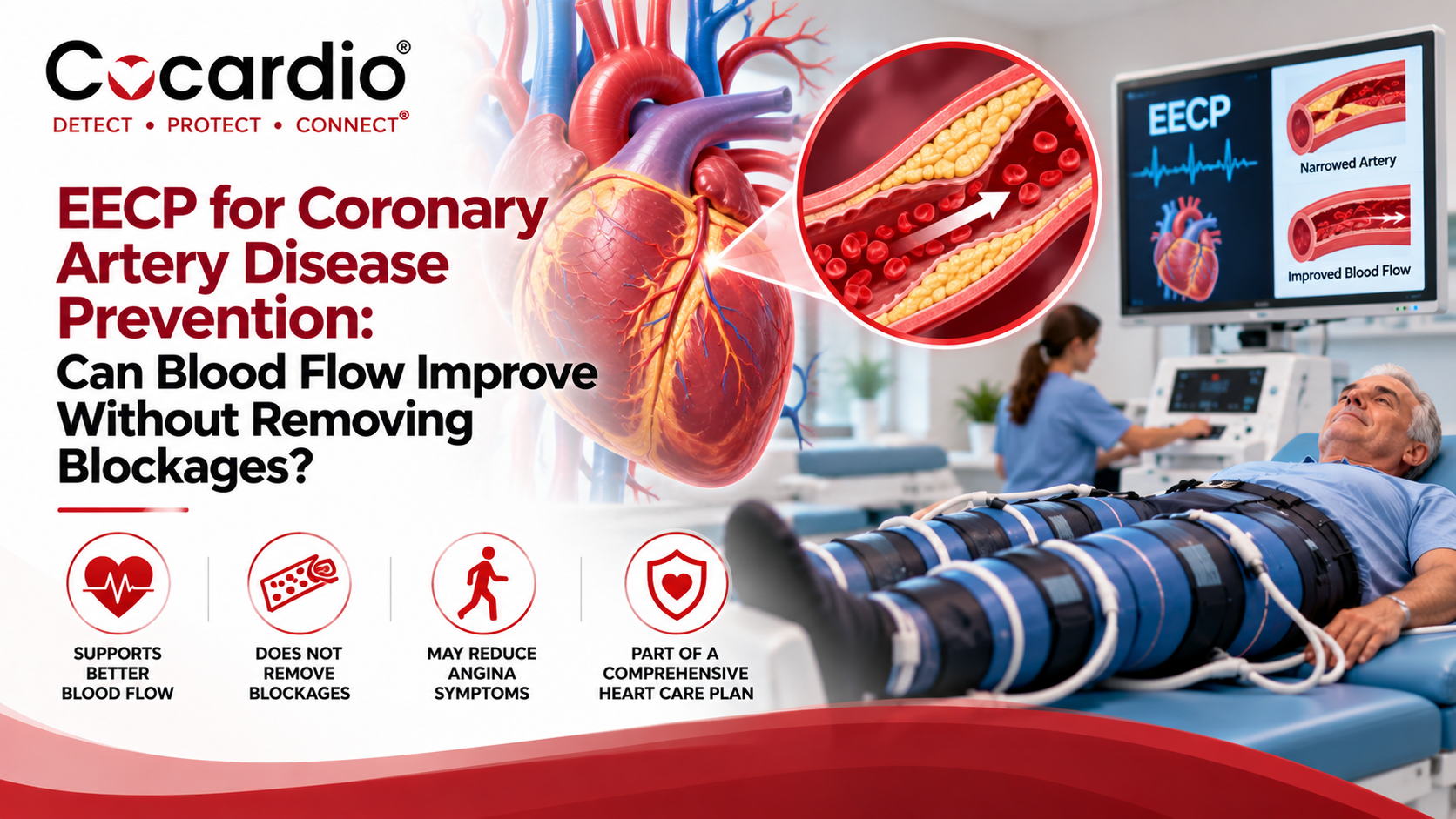
Coronary artery disease can restrict blood supply to the heart, causing chest discomfort during everyday activities. Many patients wonder whether circulation can improve even when existing coronary artery blockages remain unchanged. People researching eecp for coronary artery disease prevention should understand that enhanced external counterpulsation (EECP) may help relieve chronic stable angina in selected patients, but it has not been proven to prevent heart attacks or reverse coronary artery disease. Unlike angioplasty, EECP does not physically open narrowed coronary arteries. Its potential benefits involve changes in circulation and vascular function rather than the removal of plaque.
Can EECP Improve Blood Flow Without Opening Coronary Arteries?
Yes, EECP can influence blood flow during treatment without physically opening a blocked artery. The procedure uses inflatable cuffs around the legs that inflate and deflate in coordination with the heartbeat. This synchronized compression increases pressure during the heart's relaxation phase and may support coronary perfusion. However, changes in circulation during treatment do not guarantee lasting improvements in blood flow or angina symptoms. Clinical results vary according to the patient's cardiovascular condition.
How Does External Counterpulsation Affect Circulation?
During diastole, the heart relaxes and the coronary arteries receive much of their blood supply. EECP cuffs inflate sequentially during this phase to increase diastolic arterial pressure and promote blood movement toward the heart. The cuffs rapidly deflate before the next heartbeat, potentially reducing the resistance against which the heart pumps. These physiological effects are central to how external counterpulsation is intended to work. They do not mean that a coronary blockage has been removed.
What Happens to Existing Coronary Plaque?
EECP does not mechanically remove cholesterol deposits, calcium, or other material within coronary plaques. Existing atherosclerotic narrowing may remain present even if a patient experiences symptom improvement. This distinction is important because better symptom control does not necessarily mean that the underlying disease has disappeared. Coronary plaque management requires appropriate medical treatment and cardiovascular risk reduction. Your cardiologist should explain how the condition will be monitored over time.
Why Can Angina Improve Even When Blockages Remain?
Angina occurs when the heart muscle does not receive enough oxygen-rich blood to meet its needs. Symptoms can depend on several factors, including coronary narrowing, small-vessel function, physical exertion, and the heart's oxygen demand. EECP may influence some aspects of circulation without directly changing the anatomy of a blocked artery. Researchers have also investigated whether repeated treatment produces changes in vascular function. However, the extent and clinical significance of these effects vary, and not every patient experiences improvement.
Can Collateral Circulation Help the Heart?
Collateral vessels are small vascular connections that may provide alternative routes for blood flow when coronary circulation is impaired. The development and function of these vessels differ among patients. Researchers have proposed that EECP may influence collateral circulation through repeated changes in blood flow and vascular signaling. However, it is not established that EECP reliably creates enough new collateral circulation to overcome a particular coronary blockage. Patients should not assume that treatment will bypass an obstruction naturally.
What Is Endothelial Function?
The endothelium is the thin layer of cells lining the inside of blood vessels. It helps regulate vascular tone, inflammation, and other processes involved in cardiovascular health. Some studies suggest that EECP may influence markers of endothelial function through repeated changes in blood flow. These findings help researchers understand possible mechanisms behind symptom improvement. They do not establish that EECP prevents future cardiovascular events.
Can Better Circulation Reduce Chest Discomfort?
Some appropriately selected patients report fewer angina episodes or improved exercise tolerance following EECP. These improvements may make walking, climbing stairs, or completing routine activities more manageable. However, symptoms can be influenced by several cardiovascular and noncardiovascular factors. A patient's response should therefore be evaluated alongside the established diagnosis and ongoing treatment plan. EECP should never be presented as a guaranteed solution for persistent chest pain.
What Is the Difference Between EECP and Angioplasty?
EECP and coronary angioplasty address different aspects of cardiovascular care. Angioplasty is a catheter-based procedure that may be used to widen selected narrowed coronary arteries. EECP is noninvasive and uses external compression to influence circulation without entering the arteries. The procedures have different indications, risks, and expected outcomes. A cardiologist must determine which treatment options are appropriate for an individual patient.
Does EECP Replace a Coronary Stent?
No, EECP does not replace a coronary stent when a stent is medically indicated. Stenting may be recommended in specific clinical circumstances to address coronary narrowing or acute coronary problems. EECP does not perform the same anatomical function and should not delay necessary intervention. Patients should discuss the purpose of each proposed treatment with their cardiologist. Treatment decisions must account for symptoms, coronary anatomy, clinical stability, and other relevant findings.
Can EECP Be Considered After Bypass Surgery?
Some patients continue experiencing chronic angina after coronary bypass surgery. Persistent symptoms may have several causes and require appropriate evaluation before additional treatment is considered. EECP may be discussed for selected patients with refractory chronic stable angina when the clinical circumstances support its use. Previous bypass surgery does not automatically establish eligibility. The treating clinician must review the patient's current condition and potential contraindications.
Can EECP for Coronary Artery Disease Prevention Reduce Future Heart Risks?
The phrase eecp for coronary artery disease prevention can create confusion about what the treatment has been shown to accomplish. EECP may provide symptom relief for certain patients with chronic stable angina, but it has not been established as a method of preventing heart attacks. There is also insufficient evidence to claim that it reverses coronary atherosclerosis or reliably prevents disease progression. Patients should continue established cardiovascular prevention measures even if their symptoms improve. EECP is best discussed as a potential symptom-management option rather than a substitute for preventive cardiac care.
Which Treatments Help Reduce Cardiovascular Risk?
Cardiovascular prevention typically involves addressing the factors that contribute to atherosclerotic disease. Depending on the patient's condition, clinicians may recommend cholesterol-lowering medication, blood pressure management, diabetes care, and smoking cessation. Physical activity, nutrition, and other lifestyle measures may also be important when medically appropriate. Some patients require antiplatelet medication or additional therapies based on their diagnosis and treatment history. Your cardiologist should develop an individualized plan using established clinical evidence.
Why Should You Continue Heart Medication?
Prescribed medications may serve purposes that EECP cannot replace. Some drugs help control angina symptoms, while others reduce cardiovascular risk or treat related conditions. Stopping medication because chest discomfort has improved can expose patients to avoidable complications. Any adjustment should be made by the prescribing clinician after reviewing the patient's condition. EECP should be considered within a broader care plan rather than as a replacement for medication.
Who Might Benefit From EECP Therapy for Angina?
Patients considering eecp therapy for angina should first have an established diagnosis and an appropriate cardiovascular assessment. EECP is generally considered for selected patients whose chronic stable angina remains troublesome despite suitable medical treatment. It may be discussed when additional coronary revascularization is unsuitable or has not adequately relieved symptoms. However, the decision depends on the patient's overall condition and the potential risks of treatment. Not everyone with coronary artery disease or chest discomfort is an appropriate candidate.
What Is Refractory Chronic Stable Angina?
Refractory angina refers to persistent angina symptoms despite appropriate medical treatment and consideration of available revascularization options. Symptoms may limit walking, household activities, employment, or other aspects of daily life. The diagnosis requires clinical assessment rather than simply reporting occasional chest discomfort. Your cardiologist should review previous investigations, medications, and coronary procedures before considering additional therapies. The goal is to identify the most appropriate way to manage symptoms safely.
Does the Severity of a Blockage Determine Eligibility?
The percentage of coronary narrowing is only one factor in cardiovascular treatment decisions. Symptoms, evidence of ischemia, previous procedures, and the patient's overall clinical condition also matter. Some people have substantial coronary disease without frequent angina, while others experience symptoms with less obvious obstruction. EECP eligibility cannot be determined from an angiogram report alone. A qualified clinician must assess the complete clinical picture.
Can Patients With Microvascular Angina Receive EECP?
Some patients experience angina associated with dysfunction of the coronary microcirculation rather than major obstructive narrowing. Researchers have investigated EECP for certain patients with microvascular angina, but the evidence remains more limited. EECP should not be described as an established treatment for every patient with microvascular dysfunction. Appropriate diagnostic evaluation and guideline-directed management remain essential. A cardiologist can explain whether EECP deserves consideration in a specific case.
What Medical Conditions Could Make EECP Unsuitable?
Although EECP is noninvasive, it is not appropriate for every cardiovascular patient. Certain conditions can increase treatment risks or interfere with the safe use of synchronized leg compression. Examples may include unstable cardiac symptoms, significant arrhythmias, severe peripheral vascular disease, and certain important valve disorders. Other vascular, bleeding-related, or medical concerns may also require assessment. The treating clinician should review these factors before approving treatment.
Why Is Medical Screening Important?
EECP places repeated pressure on the legs and changes circulatory dynamics during treatment. These effects require careful consideration in patients with certain cardiac or vascular conditions. Screening may involve reviewing medical records, current medications, symptoms, and relevant test results. The clinician may also request additional information from the patient's cardiologist. Medical eligibility should never be assumed from a website description alone.
Can an Eligibility Checklist Help?
An organized checklist can make the consultation process more productive. The EECP Therapy Eligibility Checklist for Persistent Angina – CoCardio® Patient Guide provides a starting point for reviewing relevant treatment considerations. Patients can prepare information about their symptoms, medications, previous cardiac procedures, and medical history. This preparation may help identify questions that need clarification before treatment. However, a checklist cannot determine eligibility or replace professional medical judgment.
What Happens During a Typical EECP Treatment Course?
A commonly used EECP protocol involves approximately 35 one-hour sessions over seven weeks. During each session, the patient lies on a treatment table while inflatable cuffs deliver synchronized compression around the legs. Clinical staff supervise treatment and monitor for relevant symptoms or discomfort. Some patients experience temporary leg soreness, skin irritation, bruising, or fatigue. The actual treatment plan should be determined by the provider and the treating clinician.
What Should You Expect During Your First Session?
The treatment team should confirm that the necessary clinical screening has been completed. Staff may review your current symptoms, explain the equipment, and position the inflatable cuffs. Once treatment begins, you will feel repeated compression synchronized with your heartbeat. You should tell the team immediately if you experience unexpected pain, dizziness, or other concerning symptoms. The first appointment may also require additional time for preparation and instructions.
When Might Symptoms Begin to Improve?
Treatment response varies between patients, and there is no guaranteed point at which symptoms will improve. Some patients may report changes during the treatment course, while others notice little or no benefit. Your clinician may review angina frequency, exercise tolerance, and daily activity limitations over time. A lack of immediate improvement after the first session does not establish the final outcome. Continued assessment remains important throughout the prescribed course.
What Happens if Angina Does Not Improve?
Persistent symptoms should prompt a discussion with your cardiologist. The clinician may reassess the diagnosis, current medications, and whether further investigation is necessary. Additional treatment decisions should be based on the patient's clinical condition rather than automatically repeating EECP. Some patients may require alternative management strategies or evaluation for other causes of chest discomfort. Never ignore worsening symptoms while waiting for treatment to become effective.
Is EECP a Non Invasive Heart Treatment?
EECP is a Non invasive heart treatment because it does not require surgical incisions or catheter insertion. This may appeal to patients exploring options for chronic angina management. However, noninvasive does not mean risk-free or appropriate for every patient. The procedure has specific clinical indications and requires appropriate medical supervision. Patients should compare treatment options based on evidence and individual suitability rather than convenience alone.
How Does EECP Differ From Other Noninvasive Treatments?
Different cardiovascular treatments address different medical problems. Medications may reduce symptoms, manage risk factors, or help prevent cardiovascular complications. Cardiac rehabilitation can support appropriately selected patients through supervised exercise and education. EECP uses external compression and has a narrower clinical role focused primarily on selected chronic angina patients. Your cardiologist should explain how these approaches fit into your overall care plan.
What Is ESP Therapy?
Patients sometimes encounter the phrase esp. therapy while searching online for cardiac treatments. This wording is not a standard clinical name for enhanced external counterpulsation. If you see it used in a listing or search result, confirm exactly which treatment the provider is describing. Do not assume that similarly named services involve identical equipment, clinical indications, or safety requirements. Ask the provider for the full medical name of the procedure before scheduling.
How Can You Evaluate EECP Providers in Encinitas?
Patients searching for EECP therapy near me may want a facility within a manageable distance of home or work. A typical treatment course involves frequent visits, making travel arrangements an important practical consideration. However, proximity should not outweigh medical screening, appropriate supervision, and communication with your cardiologist. CoCardio® in Encinitas, California, offers a local point of contact for patients exploring EECP consultations. You can inquire about the evaluation process before making any commitment to treatment.
What Should You Ask Before Choosing a Provider?
Ask how the facility reviews cardiovascular diagnoses and determines treatment eligibility. You should also understand who supervises the sessions and how unexpected symptoms are handled. Clarify whether your cardiologist needs to provide records or additional medical information. Discuss the expected appointment schedule and any relevant financial questions. These details can help you evaluate whether the provider's process meets your needs.
What if You Are Searching for EECP Treatment Near Me?
If you are looking for eecp treatment near me, start by confirming that the provider offers the specific procedure recommended by your cardiologist. Ask whether a consultation or referral is required before treatment can begin. You should also confirm how the facility handles medical screening and appointment scheduling. An online listing alone cannot establish that treatment is suitable for your condition. The appropriate next step is an individualized clinical assessment.
What Questions Should You Ask Your Cardiologist About Blood Flow?
Understanding your coronary artery disease can help you evaluate whether additional treatment is appropriate. Ask whether your symptoms are consistent with chronic stable angina and whether existing blockages explain your discomfort. You should also discuss the role of medications, previous procedures, and any further investigations. If EECP is being considered, ask what benefits are realistic and how your response would be assessed. These questions can help distinguish symptom management from treatment intended to reduce cardiovascular risk.
Can Better Symptoms Mean My Blockages Have Improved?
Not necessarily, because symptom relief and anatomical changes in coronary arteries are different outcomes. A patient may experience less chest discomfort without a measurable reduction in coronary narrowing. Likewise, changes in symptoms do not independently establish whether the underlying disease has progressed. Your cardiologist may use clinical assessments and appropriate testing to evaluate your condition. Do not assume that feeling better means prescribed preventive treatment is no longer necessary.
Should I Repeat an Angiogram After EECP?
A repeat coronary angiogram is not routinely required simply to determine whether EECP has improved symptoms. Invasive testing should be based on clinical indications rather than an expectation that EECP has removed plaque. Your cardiologist may consider further investigation if symptoms change or other concerns arise. The appropriate follow-up depends on your diagnosis and overall cardiovascular risk. Ask which measurements or clinical outcomes are most useful for evaluating your treatment response.
Can EECP Improve Quality of Life With Persistent Angina?
Persistent angina can interfere with physical activity, work, and everyday independence. For some appropriately selected patients, EECP may reduce symptom burden or improve exercise tolerance. These changes can potentially make routine activities more manageable, although outcomes vary. Patients should set realistic goals with their treating clinician before beginning treatment. EECP should not be presented as a guaranteed way to restore normal activity or eliminate coronary disease.
What Daily Activities Might Patients Monitor?
Patients can discuss changes in walking tolerance, stair climbing, or other activities that previously triggered angina. Keeping a record of symptom frequency and activity limitations may support follow-up discussions. However, patients should not deliberately push through chest pain to test their improvement. Physical activity should remain within the limits recommended by their cardiologist. New or worsening symptoms require prompt medical attention.
Why Does Long-Term Follow-Up Still Matter?
Coronary artery disease requires ongoing medical management even when symptoms improve. Cardiovascular risk factors can continue to affect health independently of angina frequency. Follow-up appointments allow clinicians to review medications, symptoms, and preventive care needs. Your treatment plan may change as your condition or medical circumstances evolve. EECP should be considered one possible component of care rather than a complete long-term solution.
Conclusion: Can Blood Flow Improve Even if Coronary Blockages Remain?
EECP can influence circulation without physically removing or widening coronary artery blockages. Some selected patients with chronic stable angina may experience symptom relief, but these outcomes are not guaranteed. People considering eecp for coronary artery disease prevention should recognize that EECP has not been proven to prevent heart attacks or reverse coronary atherosclerosis. Patients in Encinitas, California, can contact CoCardio® at +1(858) 500-1399 to inquire about EECP consultations and eligibility requirements. An appropriate cardiology assessment should guide the decision to proceed.
Request an EECP Consultation With CoCardio®
If chronic stable angina continues to affect your daily activities, you can contact CoCardio® to ask about the consultation process. The team can explain what information may be needed to discuss eligibility and appointment arrangements. Use the online inquiry form to request a response about your next steps. A consultation inquiry does not establish treatment eligibility, and your cardiologist should remain involved in treatment decisions. Submit your request using the contact details below.
Request an EECP Consultation: https://cocardioinc.com/#Form
Location: Encinitas, California
Phone: +1(858) 500-1399
Website: https://cocardioinc.com/
Medical Disclaimer
This article is intended for general educational purposes and does not constitute medical advice, diagnosis, or individualized treatment recommendations. EECP is not appropriate for every patient and has not been established as a method of removing coronary plaque, reversing coronary artery disease, or preventing heart attacks. Treatment decisions should be made with qualified healthcare professionals based on an individual's diagnosis, medical history, and cardiovascular condition. If you experience new, severe, prolonged, or worsening chest pain, especially with shortness of breath, sweating, fainting, or other concerning symptoms, call 911 or seek emergency medical care immediately.