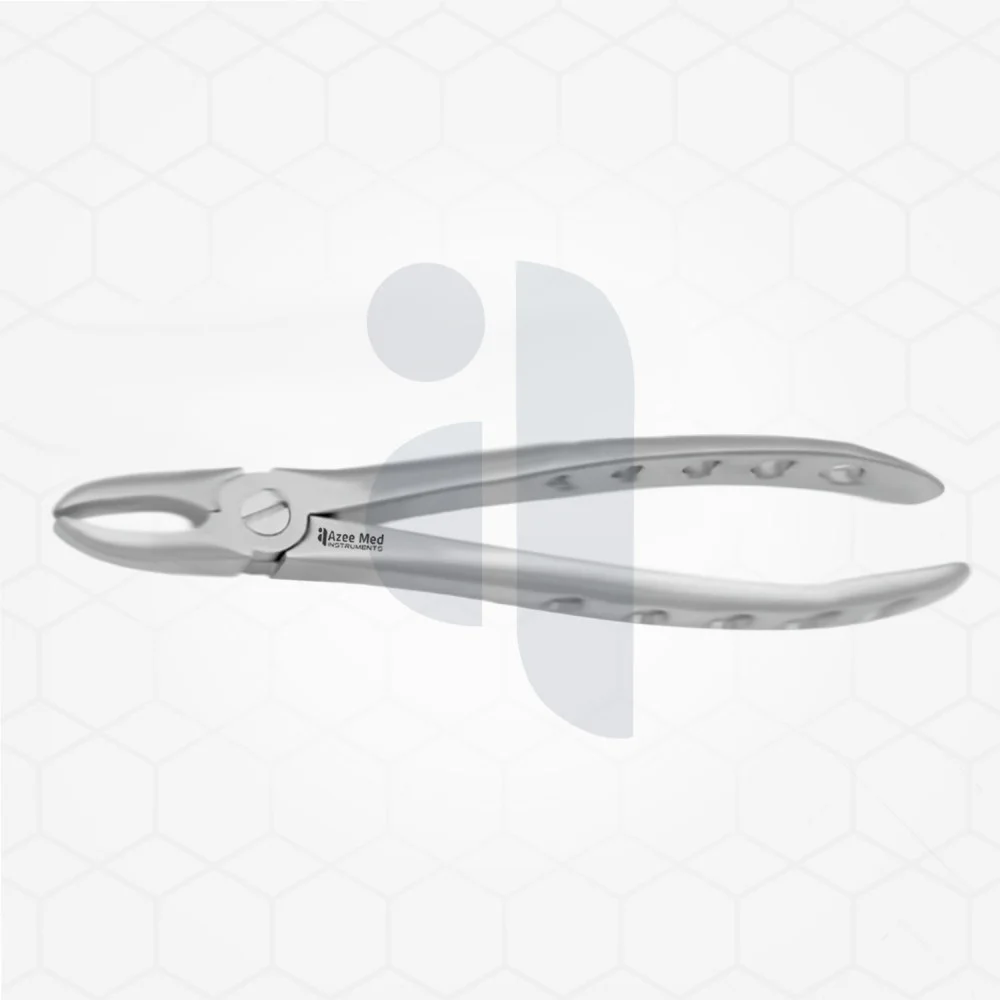
Extraction forceps are medical instruments used in dental and oral surgical procedures to grasp and remove teeth or roots from the alveolar bone. Dentists and oral surgeons use them after the tooth has been loosened with an elevator. The forceps then let the clinician grip the crown or root firmly and guide it out of the socket. Because each tooth has a different shape and root pattern, extraction forceps come in many designs, each matched to a specific area of the mouth.
Design and Key Features
Every forceps has three main parts: the beaks, the hinge, and the handles. The beaks grip the tooth and are shaped to fit the crown and root trunk. The hinge links the beaks to the handles and controls their movement. The handles give the clinician leverage and a comfortable hold. Quality extraction forceps have finely serrated beaks that reduce slipping and help prevent crown fractures. Most are available in American or English patterns, so clinicians can choose the grip that best suits their technique.
Types for Every Tooth
Forceps for the upper arch usually have beaks roughly in line with the handles, often with a slight curve for better access. Lower forceps have beaks set at about a right angle to the handles, so the clinician can reach down to the mandibular teeth. Popular patterns include the universal No. 150 for maxillary teeth and No. 151 for mandibular teeth. The No. 23 "cowhorn" engages the furcation of lower molars. Bayonet forceps suit upper roots and third molars. With the right set of extraction forceps, a practice can handle routine and complex cases with confidence.
Clinical Applications
Dentists rely on extraction forceps for removing decayed, damaged, or impacted teeth. They are also used to clear space for orthodontic treatment and to retrieve broken root tips. Using controlled buccal, lingual, and rotational movements, the clinician expands the socket and frees the tooth. A secure grip protects nearby teeth and soft tissue. It also lowers patient discomfort and supports faster healing.
Why Quality Makes a Difference
A poorly made instrument with loose hinges or misaligned beaks can slip, crush the crown, or damage nearby bone. Precision anal speculum made from surgical-grade stainless steel close evenly and grip firmly. They resist corrosion and stand up to repeated autoclave cycles. For clinics and hospital buyers, durable extraction forceps mean fewer replacements, lower long-term costs, and steady performance chair after chair.
Care and Maintenance
Good care keeps these instruments working well for years. Rinse them right after use to stop debris from drying on the beaks. Clean the serrations and hinge thoroughly, then check for wear, cracks, or loose joints. Lubricate the hinge before sterilization so it moves smoothly.
Conclusion
Safe tooth removal starts with the right instrument. Extraction forceps give clinicians the grip, control, and leverage they need for clean, predictable extractions and better patient comfort. When you choose AzeeMed, you get instruments shaped by more than twenty years of craftsmanship. Explore our full dental and surgical range today and equip your team with tools they can trust in every procedure.