A backyard patio should be comfortable, durable, and suitable for the way your household uses its outdoor space. Choosing the right surface is especially important in Southern California, where strong sunlight, warm temperatures, and occasional heavy rainfall can affect outdoor materials.
Finding the best patio material means looking beyond appearance. You also need to consider heat retention, slip resistance, drainage, maintenance, and long-term durability. For Los Angeles homeowners, concrete pavers, travertine, natural flagstone, and poured concrete are among the main options worth comparing.
If you are considering patio pavers in Los Angeles, understanding how these materials perform can help you select a surface that fits your property and outdoor lifestyle.
What Is the Best Patio Material for Southern California?
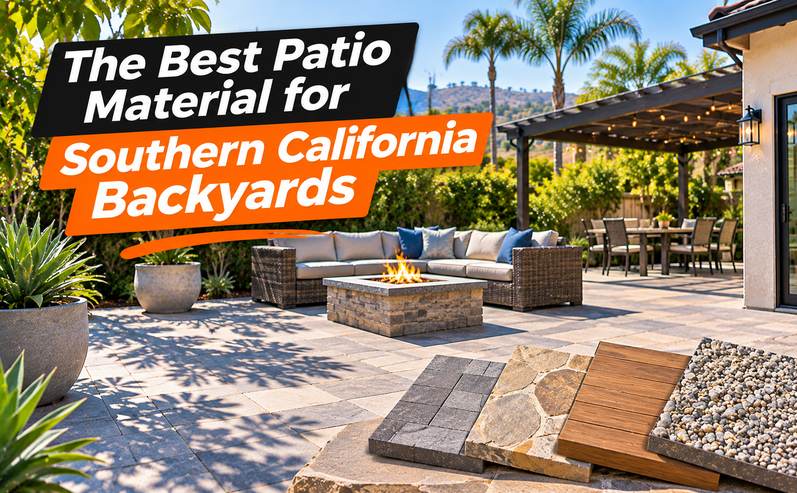
Concrete pavers are a practical choice for many Southern California backyards because they offer design flexibility, individual replacement options, and a variety of colors and patterns. However, travertine and natural stone can also be excellent choices depending on your priorities.
The right material depends on how much direct sunlight your patio receives, how frequently it gets used, and how much maintenance you are comfortable handling.
Here are four popular patio surface options to consider.
1. Concrete Pavers: A Versatile Choice for Backyards
Concrete pavers are manufactured in different shapes, colors, sizes, and textures. This makes them suitable for traditional patios, contemporary outdoor living areas, and spaces surrounding outdoor kitchens.
One major advantage is their modular construction. If an individual paver becomes damaged or stained, that section can generally be removed and replaced without rebuilding the entire patio.
Other benefits include:
Multiple patterns and design possibilities.
Individual paver replacement when necessary.
Compatibility with different backyard layouts.
Good durability when properly installed.
Easy integration with walkways and other paved areas.
In sunny Los Angeles backyards, lighter-colored pavers may help reduce surface heat compared with darker alternatives, although actual temperatures depend on the material, finish, and exposure.
For homeowners comparing the best patio material for everyday use, concrete pavers offer a useful balance of appearance, flexibility, and maintenance.
2. Travertine: Natural Beauty and Outdoor Comfort
A travertine patio offers a natural stone appearance with distinctive patterns and color variations. It is commonly selected for upscale outdoor living areas, pool surroundings, and patios where appearance is a major consideration.
Travertine is available in different finishes. Textured finishes are generally worth considering for outdoor areas because they can provide better footing than highly polished surfaces.
Advantages include:
Natural stone patterns and colors.
A distinctive appearance for outdoor spaces.
Several available finishes.
A suitable option for many poolside applications.
However, travertine requires appropriate installation and maintenance. Certain finishes and stone varieties can be more susceptible to staining or surface wear.
Homeowners should also compare how different stone colors and finishes feel under direct sunlight. A lighter travertine surface may be preferable in an exposed backyard, but it should still be evaluated as an actual sample.
3. Natural Flagstone: A Distinctive Outdoor Surface
Natural flagstone is another attractive option for homeowners who prefer an organic appearance. Its irregular shapes and natural color variations create a less uniform finish than manufactured pavers.
When comparing flagstone vs pavers, the biggest difference is often the appearance and installation approach.
Flagstone works well for:
Garden patios and landscaped backyards.
Natural-looking outdoor seating areas.
Properties with rustic or traditional designs.
Patios that incorporate natural stone features.
However, irregular stone shapes can require more detailed installation. Joint spacing, surface consistency, and drainage need careful attention to create a comfortable walking area.
Concrete pavers generally provide more consistent dimensions and predictable patterns, while flagstone offers greater natural variation.
Both can be suitable, depending on the desired appearance and installation requirements.
4. Poured Concrete: A Simple and Clean Appearance
Poured concrete provides a continuous surface without individual paver joints. It can work well for homeowners who prefer a straightforward patio design.
Its advantages include a relatively uniform appearance and compatibility with different finishes, including broom-finished, stamped, and textured surfaces.
However, concrete can develop cracks as it cures or as ground conditions change. Repairs may also be more noticeable when the existing finish or color is difficult to match.
Proper grading, base preparation, reinforcement where appropriate, and control joints are important considerations.
For homeowners evaluating the best patio material, poured concrete may suit simpler layouts, while pavers offer more flexibility for localized repairs.
How to Choose the Right Patio Material in Los Angeles
Before selecting a surface, consider how the patio will function throughout the year.
Sun exposure and surface temperature: Dark materials can become uncomfortable under direct sunlight. Request samples and compare them in the actual installation area.
Drainage: The patio should direct water away from the house and prevent unwanted pooling. Existing slopes, soil conditions, and drainage connections can influence the design.
Foot traffic: A patio used for dining, entertaining, or frequent movement needs a surface that provides stable footing and suits everyday use.
Maintenance: Natural stone may require specific cleaning products or periodic sealing, depending on the material. Concrete pavers and poured concrete also need appropriate cleaning and upkeep.
Overall design: Consider how the patio will coordinate with your home's exterior, landscaping, walkways, pool, and outdoor kitchen.
The best flooring for outdoor patio spaces is not necessarily the most expensive or visually impressive material. It is the one that meets your practical requirements while complementing your property.
Why Professional Installation Matters
Even high-quality materials can perform poorly when the foundation and drainage are not handled correctly.
A properly installed patio typically requires suitable excavation, a stable compacted base, accurate grading, appropriate bedding material, and correctly finished joints.
Installation requirements vary depending on the selected material, existing soil, site conditions, and intended use.
We consider the layout, surface selection, and site preparation when planning outdoor paving work. These details help homeowners make informed decisions before construction begins.
Find the Right Patio Surface for Your Backyard
Choosing the Best Patio Material for a Southern California backyard comes down to balancing appearance, comfort, durability, and maintenance. Concrete pavers are versatile, travertine provides natural stone appeal, flagstone offers an organic finish, and poured concrete suits simpler designs.
The most suitable choice depends on your property and how you plan to use the space. If you are planning a backyard improvement in Los Angeles, explore our Paver Installation Services in Los Angeles to learn how My Outdoor Builder can help with your outdoor paving project.
Frequently Asked Questions
1. What is the most durable material for an outdoor patio?
Concrete pavers and natural stone can both provide long-lasting patio surfaces when the materials are suitable for the application and installed over a properly prepared base. Durability also depends on maintenance and site conditions.
2. Is travertine better than concrete pavers for a patio?
Neither is automatically better. Travertine offers natural stone patterns and an upscale appearance, while concrete pavers provide more uniform designs and easier individual replacement.
3. What patio material stays coolest in the sun?
Lighter-colored materials with suitable surface finishes are often worth considering for sunny areas. However, actual surface temperature depends on color, density, texture, and direct sunlight exposure.
4. Is flagstone or concrete pavers better for a backyard?
Flagstone is suitable for homeowners who prefer natural shapes and textures. Concrete pavers are generally easier to arrange in consistent patterns and replace individually. Your preferred design and installation requirements should guide the decision.
5. Does a paver patio require regular maintenance?
Yes. Routine sweeping, occasional washing, joint sand maintenance, and checking for shifting or drainage issues help keep a paver patio in good condition. Additional maintenance depends on the paver type and surrounding environment.
6. What should I consider before installing a patio in Los Angeles?
Consider direct sun exposure, drainage, soil conditions, surface temperature, available space, and the intended use of the patio. Local permitting requirements may also apply depending on the project's scope and property conditions.