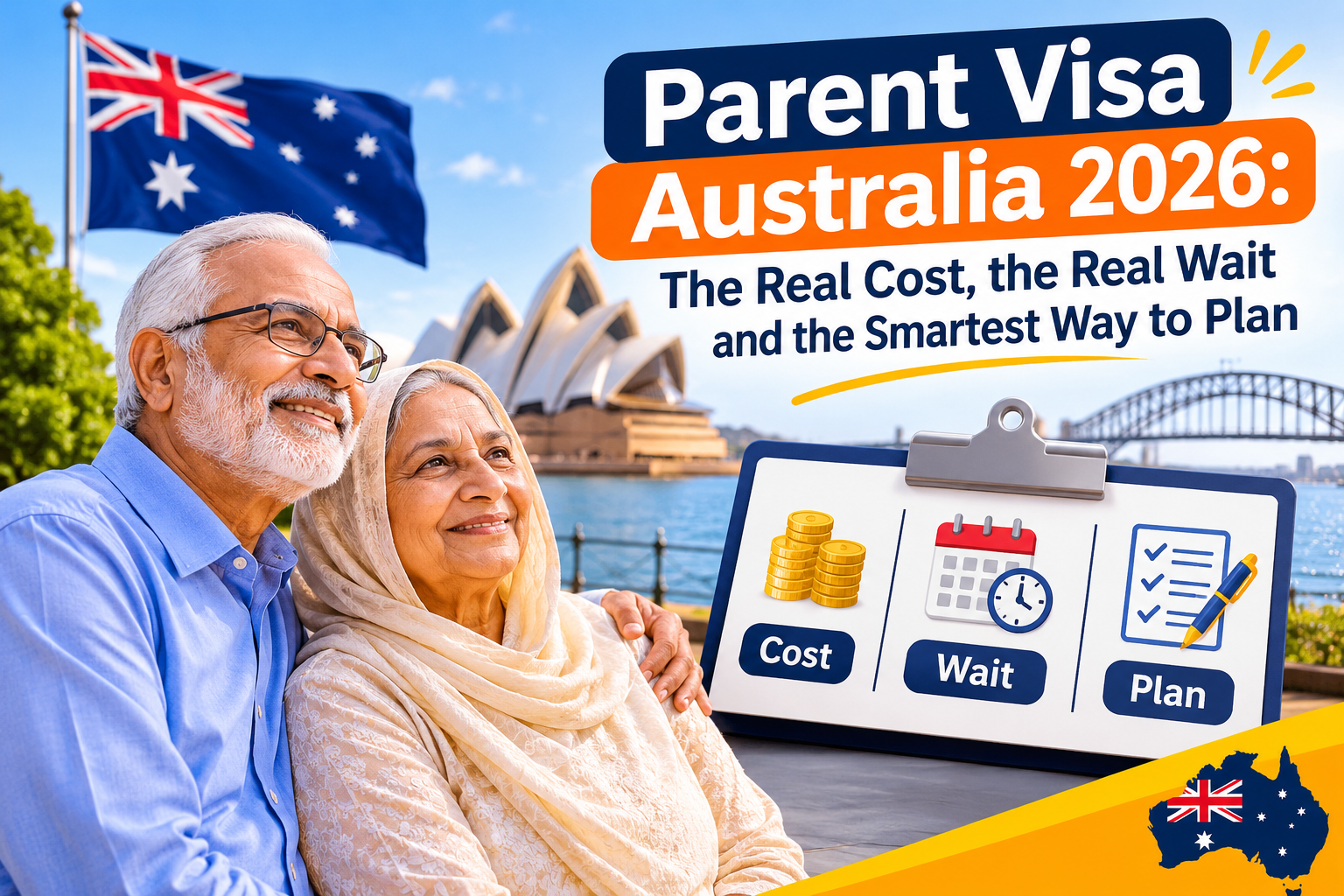
Bringing your mum and dad to live near you in Australia is one of the most emotional migration goals there is. It is also one of the most misunderstood. Searches for “parent visa Australia” keep climbing because families want straight answers on cost, wait times and which subclass fits them. Here is what the Department of Home Affairs currently says, in plain English.
Why the parent visa is different from every other visa
Most visas are processed as applications arrive. Parent visas are not. Every Parent visa application is subject to capping and queueing, including subclasses 103, 804, 143, 173, 864 and 884. Capping means only a set number of visas can be granted each program year. The rest wait in a queue until a place opens up.
So the real question is not just “Am I eligible?” It is “Which queue am I joining, and can my family afford the wait?”
The parent visa subclasses, explained
Non-contributory (lower cost, longer wait). The Parent visa (subclass 103) is a permanent visa for parents of a settled Australian citizen, permanent resident or eligible New Zealand citizen. It is lodged from offshore. The Aged Parent visa (subclass 804) works similarly but is designed for parents who have reached pension age and can apply from inside Australia.
Contributory (higher cost, faster wait). The Contributory Parent visa (subclass 143) is the permanent option for families willing to pay more to move up the queue. The temporary Contributory Parent visa (subclass 173) lets parents come first and later move to the permanent 143. Parents of pension age have the equivalent Contributory Aged Parent visas, subclass 864 (permanent) and 884 (temporary).
Temporary visiting option. The Sponsored Parent (Temporary) visa (subclass 870) is not part of the capped queue. It lets parents stay for extended periods without waiting decades. Treat it as a practical way to be together while a permanent application sits in the queue.
What does a parent visa cost in 2026-27?
Cost is the biggest dividing line. Based on Home Affairs charges reported for a single applicant, the starting figures are $8,665 for subclass 103, $33,375 for subclass 173 and $49,900 for subclass 143. Those are base visa application charges only. Families should also budget for medicals, police certificates, Assurance of Support bonds, health insurance and professional fees. Charges are indexed each 1 July, so confirm the current figure on the Home Affairs fees page before you pay.
How long will it actually take?
Here is the part families need to hear honestly. For a brand-new application, Home Affairs estimates 18 years for Contributory Parent visas and 42 years for Parent and Aged Parent visas. The department also notes that these are estimates based on the current number of places each year, not a promise for any individual case.
The queue release dates tell you what is moving today. As at 31 August 2026, Home Affairs had released Contributory Parent applications queued up to November 2018, Contributory Aged Parent applications up to November 2020, Parent applications up to March 2014, and Aged Parent applications up to October 2014. Home Affairs updates this page regularly, so check it before making a decision.
That gap is why many families now compare a lower-cost 103 against the contributory route. The contributory route costs far more, but it is the only permanent pathway with a wait that is measured in years rather than decades.
Who can sponsor, and what are the core requirements?
Without going down the technical rabbit hole, most parent visa applications involve the following:
Your parent must pass the Balance of Family Test, which generally means at least half of their children live permanently in Australia, or more of them live here than in any other single country. The sponsor must be an eligible, settled Australian citizen, permanent resident or eligible New Zealand citizen. Both health and character requirements apply, and an Assurance of Support is usually required. Contributory visas also have a second payment stage in addition to the first charge.
Missing any one of these can mean a refusal after years in the queue. Getting the pathway right at the start is what protects both your money and your time.
A smarter way to plan: think in stages
Families who plan well rarely rely on a single visa. A common approach is to lodge the permanent application that fits their budget, then use a temporary visa such as the 870 so parents can spend real time in Australia while the application progresses. The Home Affairs processing guide listed in third-party summaries says most 870 applications are processed within about nine months, but check the official page for the latest timeframe.
How Edvise Hub helps
Choosing between 103, 143 and the staged 173 route is a financial and family decision as much as a legal one. Edvise Hub’s Melbourne-based migration team reviews your family structure, tests the Balance of Family requirement, compares the contributory and non-contributory routes against your budget, and prepares a complete application so avoidable errors do not cost you years. We also help plan a temporary visa strategy so your parents are not waiting overseas.
Ready to plan? Email contact@edvisehub.com or call +61 424 295 050.
Frequently Asked Questions
1. How long does a parent visa take in Australia?
Home Affairs estimates around 18 years for new Contributory Parent applications and 42 years for new Parent and Aged Parent applications.
2. How much does a parent visa cost in Australia?
Base charges start at about $8,665 for subclass 103 and about $49,900 for the contributory subclass 143, before other costs.
3. What is the difference between a contributory and non-contributory parent visa?
Contributory visas cost significantly more but have a much shorter queue, while non-contributory visas cost less but wait far longer.
4. Can my parents stay in Australia while waiting for a parent visa?
Yes, many families use temporary options such as the Sponsored Parent (Temporary) visa (subclass 870) or the temporary contributory visas while the permanent application waits.