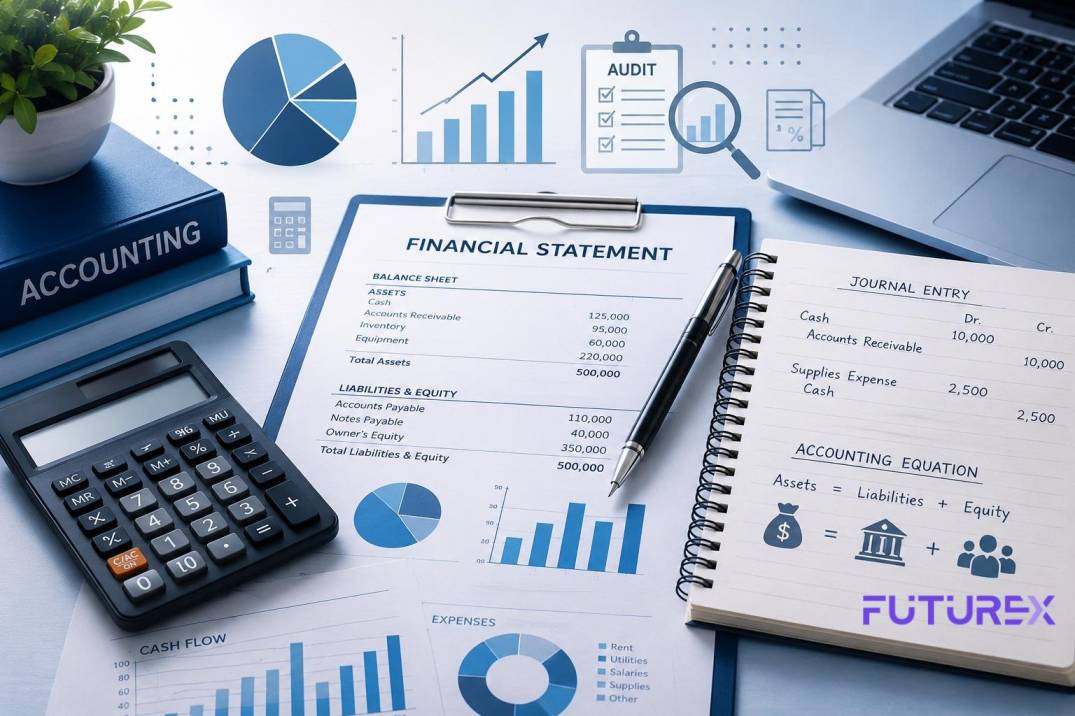
Financial management is essential for every organisation, whether it operates to generate profits or serves a social, educational or charitable purpose. Maintaining accurate records of income and expenses helps organisations understand how their financial resources are being used and whether their activities are financially sustainable.
One important financial statement used by non-profit organisations is the Income and Expenditure Account. It summarises revenue income and expenses for a particular accounting period and determines whether the organisation has earned a surplus or incurred a deficit.
Understanding this account is useful for educational institutions, charitable trusts, clubs, societies and other non-profit organisations that need to monitor their financial performance.
What Is an Income and Expenditure Account?
An Income and Expenditure Account is a financial statement generally prepared by non-profit organisations at the end of an accounting period. It records revenue income earned and revenue expenses incurred during that period, following the accrual basis of accounting.
Its primary purpose is to calculate the organisation's financial surplus or deficit.
Surplus: When total income exceeds total expenditure.
Deficit: When total expenditure exceeds total income.
Unlike a Receipts and Payments Account, which records actual cash and bank transactions, an Income and Expenditure Account considers income earned and expenses incurred, including applicable outstanding and prepaid amounts.
For a more detailed explanation, readers can explore this guide to the Income and Expenditure Account, including its meaning, features and examples.
Objectives of an Income and Expenditure Account
Preparing an Income and Expenditure Account helps organisations understand their financial position and manage resources effectively.
1. Calculate Financial Surplus or Deficit
The primary objective is to determine whether the organisation's revenue income is sufficient to cover its operating expenses. This provides a clear picture of its financial performance during the accounting year.
2. Monitor Income and Expenses
The account presents different sources of revenue and categories of expenditure in an organised manner. Management can review where money is coming from and how it is being spent.
3. Support Financial Planning
By reviewing previous accounting periods, organisations can identify spending patterns, estimate future expenses and prepare more realistic budgets.
4. Improve Financial Transparency
A properly maintained Income and Expenditure Account provides trustees, management committees, members and other stakeholders with useful information about financial activities.
5. Support Better Decision-Making
Financial information helps management evaluate operating costs, identify unnecessary expenditure and decide how available resources should be allocated.
Key Features of an Income and Expenditure Account
An Income and Expenditure Account has several important characteristics:
Nominal account: It records revenue income and revenue expenses.
Accrual basis: Income and expenses are recorded in the period to which they relate, rather than only when cash is received or paid.
Periodic preparation: It is generally prepared at the end of an accounting year.
Revenue transactions: It includes recurring income and operating expenses rather than capital receipts and capital payments.
Non-cash expenses: Items such as depreciation are included where applicable.
Surplus or deficit: The difference between total income and total expenditure represents the financial result for the period.
Format of an Income and Expenditure Account
An Income and Expenditure Account is generally prepared in a two-sided format, with expenditure on the debit side and income on the credit side.
A simplified format is shown below:
Expenditure (Dr.)Amount (?)Income (Cr.)Amount (?)Salaries60,000Subscriptions1,20,000Rent24,000Donations for general purposes30,000Electricity12,000Interest received10,000Stationery8,000Other revenue income20,000Depreciation6,000Surplus70,000Total1,80,000Total1,80,000Note: This is an illustrative format. Actual account heads and amounts will depend on the organisation's activities and accounting records.
Main Components of an Income and Expenditure Account
To prepare an accurate statement, it is important to understand which transactions should be included.
Revenue Income
Revenue income represents earnings and receipts related to the organisation's regular activities.
Common examples include:
Membership subscriptions
General donations
Interest income
Admission fees
Revenue grants
Other recurring income
The accounting treatment of donations and grants depends on their nature and any restrictions attached to them. Amounts received for a specific capital purpose should not automatically be treated as ordinary revenue income.
Revenue Expenditure
Revenue expenditure includes recurring costs incurred to operate the organisation.
Examples include:
Employee salaries and wages
Office rent
Electricity and water charges
Printing and stationery
Repairs and maintenance
Administrative expenses
Depreciation
Capital expenditure, such as purchasing land, buildings or major equipment, is generally not charged directly as a revenue expense. Instead, it is accounted for as an asset, with depreciation recognised where applicable.
How to Prepare an Income and Expenditure Account
Preparing this account requires accurate financial records and appropriate accounting adjustments. The following steps provide a general approach.
Step 1: Review the Receipts and Payments Account
Begin by reviewing the organisation's Receipts and Payments Account to identify relevant financial transactions.
However, remember that not every receipt or payment belongs in the Income and Expenditure Account. Capital transactions and other non-revenue items must be treated separately.
Step 2: Identify Revenue Income
Identify income earned during the accounting period, including subscriptions, interest and other revenue sources.
Adjust the amounts for outstanding income and income received in advance, wherever applicable.
Step 3: Identify Revenue Expenses
Collect all relevant operating expenses, such as rent, salaries, electricity and administrative costs.
Step 4: Make Necessary Adjustments
Adjust expenses and income to reflect the correct accounting period. Consider outstanding expenses, prepaid expenses, depreciation and other relevant accounting entries.
Step 5: Calculate Total Income and Expenditure
Add the revenue income and expenditure separately.
Step 6: Determine the Surplus or Deficit
Compare the totals to calculate the financial result.
If income exceeds expenditure, the difference is a surplus. If expenditure exceeds income, the difference is a deficit.
Practical Example of an Income and Expenditure Account
Consider a charitable organisation that records the following revenue transactions during a financial year:
Income:
Subscriptions: ?1,20,000
General donations: ?50,000
Interest income: ?10,000
Other revenue income: ?20,000
Total Income: ?2,00,000
Expenditure:
Salaries: ?70,000
Rent: ?30,000
Electricity: ?10,000
Stationery: ?10,000
Depreciation: ?10,000
Total Expenditure: ?1,30,000
The calculation is:
Surplus = Total Income ? Total Expenditure
Surplus = ?2,00,000 ? ?1,30,000 = ?70,000
Therefore, the organisation has generated a surplus of ?70,000 during the accounting period.
This surplus indicates that its revenue income exceeded its revenue expenses. It does not necessarily mean that the organisation has the same amount available as cash because the account follows accrual accounting principles.
Important Adjustments in an Income and Expenditure Account
Accounting adjustments are essential for presenting accurate financial results.
Outstanding Expenses
Outstanding expenses are amounts incurred during the accounting period but not yet paid.
For example, if an organisation owes ?5,000 in electricity charges at year-end, the expense must be included in the current period even if payment is made later.
Prepaid Expenses
Prepaid expenses are payments made in advance for services or benefits relating to a future accounting period.
The portion relating to the next period is excluded from the current period's expenditure.
Outstanding Income
Outstanding income refers to income earned but not yet received.
For example, if ?8,000 in subscription income is due but remains unpaid at year-end, it may need to be recognised as income for the current period.
Income Received in Advance
This represents income received during the current period but relating to a future accounting period. The relevant amount is generally excluded from the current period's income.
Depreciation
Depreciation represents the allocation of an asset's depreciable amount over its useful life. It is recognised as an expense in the Income and Expenditure Account where applicable.
These adjustments help ensure that income and expenses are recognised in the correct accounting period.
Difference Between Income and Expenditure Account and Receipts and Payments Account
Although both statements are commonly used by non-profit organisations, they serve different purposes.
BasisIncome and Expenditure AccountReceipts and Payments AccountAccounting basisAccrual basisCash basisPurposeDetermines surplus or deficitSummarises cash and bank transactionsTransactionsRevenue income and expensesCash and bank receipts and paymentsCapital itemsGenerally excludedIncludedOutstanding itemsConsideredNot recorded until cash movement occursDepreciationIncluded where applicableNot recorded as a cash paymentDifference Between Income and Expenditure Account and Profit and Loss Account
The Income and Expenditure Account is generally prepared by non-profit organisations, whereas commercial businesses prepare a Profit and Loss Account as part of their financial reporting.
BasisIncome and Expenditure AccountProfit and Loss AccountOrganisation typeNon-profit organisationsFor-profit businessesMain objectiveDetermine surplus or deficitDetermine net profit or lossFinancial resultSurplus or deficitNet profit or net lossUse of resultSupports organisational objectivesMeasures business profitabilityBoth statements help evaluate financial performance, but their purpose and organisational context are different.
Common Mistakes to Avoid
Errors in accounting statements can affect financial reporting and decision-making. Organisations should avoid the following mistakes:
Recording capital receipts as ordinary revenue income.
Ignoring outstanding and prepaid expenses.
Excluding depreciation from applicable expense calculations.
Treating all donations as unrestricted revenue income without considering their conditions.
Recording cash transactions without checking the accounting period to which they relate.
Failing to reconcile accounting records with supporting documents.
Maintaining organised books, reviewing ledger entries and making appropriate adjustments can help reduce these errors.
Why Professional Accounting and Bookkeeping Support Matters
Maintaining accurate financial records requires consistent transaction recording, account reconciliation, documentation and periodic review. As organisations grow, these responsibilities can become more demanding.
Professional accounting support can help businesses and organisations maintain structured records, monitor expenses, prepare financial reports and improve financial visibility.
Businesses looking for assistance with financial record management can explore Futurex's accounting and bookkeeping services.
For organisations that want to delegate routine accounting activities, Futurex's outsourced accounting services in India provide support across bookkeeping, accounts payable, accounts receivable and financial reporting.
The right accounting support can help organisations maintain organised financial information and focus more effectively on their core activities.
Frequently Asked Questions
1. What is the main purpose of an Income and Expenditure Account?
Its main purpose is to calculate the surplus or deficit of a non-profit organisation by comparing revenue income with revenue expenditure for a particular accounting period.
2. Is an Income and Expenditure Account prepared on a cash or accrual basis?
It is generally prepared on an accrual basis. Income and expenses are recognised in the period to which they relate, regardless of when cash is received or paid.
3. Is depreciation included in an Income and Expenditure Account?
Yes. Depreciation is generally included as an expense because it represents the allocation of an asset's depreciable amount over its useful life.
4. What is shown on the debit side of an Income and Expenditure Account?
The debit side generally records revenue expenses such as salaries, rent, electricity, stationery, repairs and depreciation.
5. What is shown on the credit side of an Income and Expenditure Account?
The credit side generally records revenue income such as subscriptions, general donations, interest and other recurring income.
6. What happens when expenditure exceeds income?
When total revenue expenditure exceeds total revenue income, the organisation records a deficit for the accounting period.
7. Who generally prepares an Income and Expenditure Account?
Clubs, charitable trusts, educational institutions, societies and other non-profit organisations generally prepare this account to evaluate their financial performance.
Conclusion
An Income and Expenditure Account is an important financial statement for non-profit organisations. It provides a structured summary of revenue income and expenses, helps determine the surplus or deficit, and supports better financial planning.
Accurate preparation depends on proper bookkeeping, correct classification of transactions and appropriate accounting adjustments. By maintaining reliable financial records and reviewing financial statements regularly, organisations can improve transparency and manage their resources more effectively.
For businesses seeking professional support with financial records and reporting, exploring