Mid-century furniture has a special appeal that goes beyond its appearance. Defined by clean lines, practical designs, warm timber finishes and thoughtful craftsmanship, these pieces bring timeless character to contemporary interiors. Whether you own a beautifully preserved teak sideboard, a vintage dining table or an elegant timber lounge chair, the right care can help maintain its beauty and usefulness for decades.
However, older furniture needs a little more attention than many modern pieces. Natural timber responds to changes in temperature and humidity, finishes can become worn, and everyday use may gradually affect joints, surfaces and upholstery. Understanding how to protect these details is essential when caring for treasured vintage pieces.
The good news is that maintaining mid-century furniture does not require complicated routines or expensive treatments. With gentle cleaning, suitable products and a few practical precautions, you can preserve its original character while allowing it to remain part of your everyday life.
1. Understand the Materials and Original Finish
Before cleaning or restoring a vintage piece, take time to understand what it is made from and how its surface has been finished. Mid-century furniture commonly features teak, walnut, oak and other timbers, sometimes combined with veneer, metal, glass or upholstered elements.
Solid timber and timber veneer require slightly different approaches. Solid wood can expand and contract with changes in moisture, while veneer consists of a thin layer of decorative timber bonded to a supporting material. Excessive moisture or aggressive sanding can damage veneer, potentially exposing the substrate beneath it.
The finish matters just as much. Some pieces have an oil finish, while others are protected by lacquer, varnish or another surface coating. A product suitable for one finish may leave another looking cloudy, greasy or uneven.
Start by examining the furniture in natural light. Look for faded patches, lifting veneer, surface scratches, loose joints and signs of previous repairs. If the finish is uncertain, test any cleaning method on a discreet area first.
Avoid sanding, stripping or refinishing a vintage piece simply because it looks slightly aged. Gentle wear and changes in colour can be part of its history. Preserving the original finish, whenever practical, helps retain both its character and its value.
2. Establish a Gentle and Consistent Cleaning Routine
Regular dusting is one of the simplest mid-century furniture maintenance essentials. Dust may appear harmless, but particles can accumulate in corners, around handles and along edges, where repeated friction can contribute to fine surface scratches.
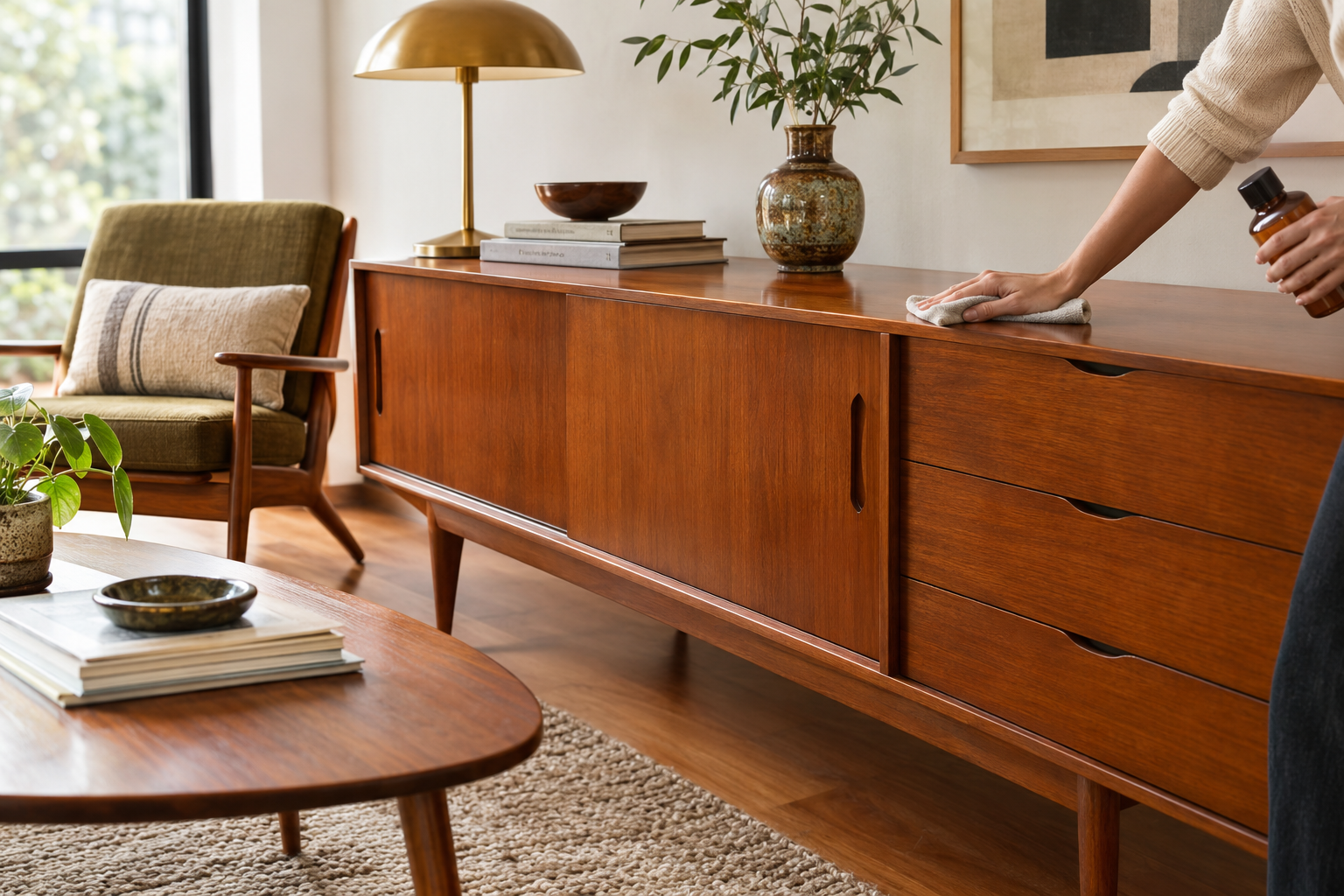
Use a clean, soft microfibre cloth to remove dust. Work gently, following the grain of the timber where possible. For more detailed areas, such as carved edges or narrow gaps around cabinet doors, use a soft brush to lift away debris without scraping the finish.
When a surface needs more than dusting, begin with the least aggressive cleaning method. A lightly dampened cloth may be appropriate for some sealed finishes, but avoid soaking the timber or allowing water to collect around joints and veneer edges. Dry the surface immediately with a separate soft cloth.
Never assume that household sprays, abrasive sponges or strong detergents are safe for vintage furniture. These products can dull the finish, leave residue or damage delicate surfaces.
Glass, metal fittings and upholstery should also be cleaned according to their own material requirements. Keep glass cleaners away from timber edges and avoid spraying liquids directly onto the furniture. Applying the cleaner to a cloth first offers better control and reduces the risk of accidental damage.
A few minutes of careful cleaning each week can help prevent grime from building up and reduce the need for more intensive treatment later.
3. Choose the Right Furniture Care Products for Timber Finishes
Selecting suitable furniture care products for timber finishes is essential for protecting older pieces without changing their appearance. The best product is not necessarily the most expensive one; it is the one that suits the material, existing finish and condition of the furniture.
For everyday maintenance, a soft cloth and a gentle cleaning method are often enough. Specialist timber cleaners can be useful when a surface has accumulated residue, provided the manufacturer confirms compatibility with the finish.
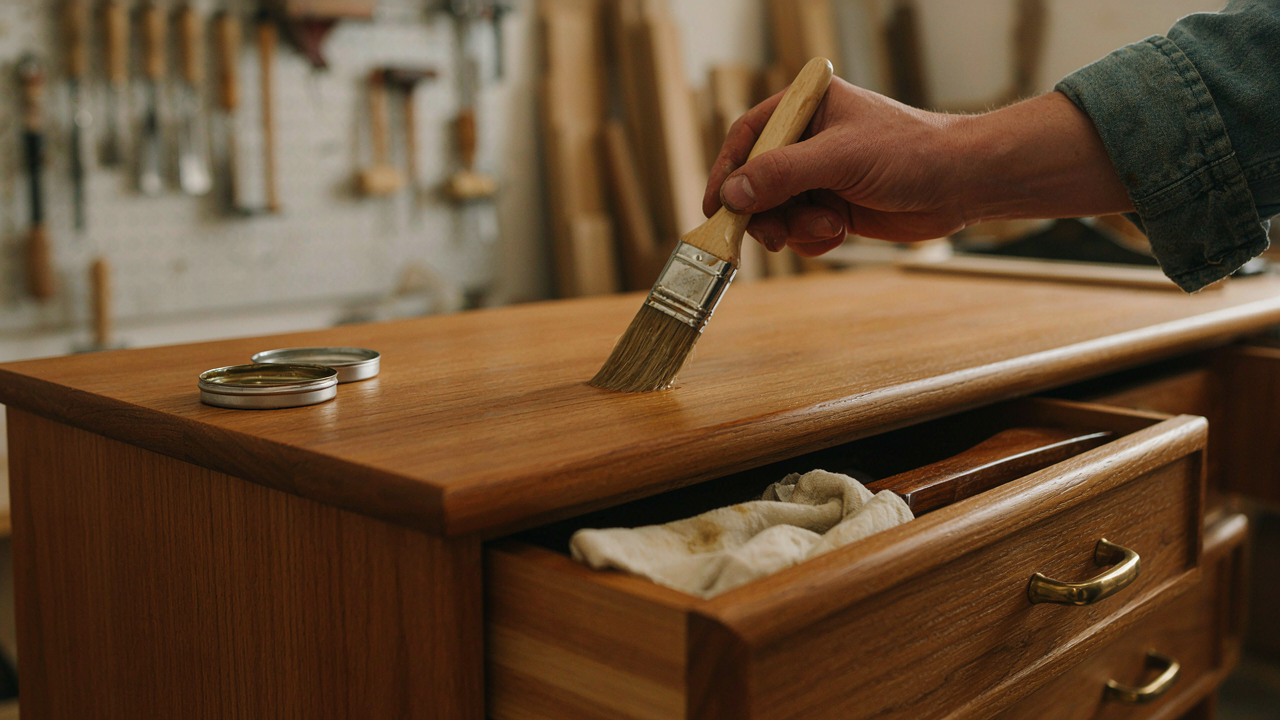
Furniture oils may help nourish or refresh certain unfinished or oil-finished surfaces, but they are not appropriate for every piece. Applying oil to lacquered or varnished timber may leave a sticky film without improving the underlying finish. Similarly, wax products can create an attractive sheen on compatible surfaces but may build up over time or complicate future refinishing.
Before using any treatment, read the instructions carefully and test it in an inconspicuous spot. Apply only the recommended amount, and avoid combining several products in an attempt to achieve a deeper shine.
Steer clear of silicone-heavy polishes when maintaining valuable vintage furniture, particularly if future restoration may be necessary. Silicone residue can make some refinishing processes more difficult.
If a piece has significant fading, white marks, water rings or peeling lacquer, consult a furniture restoration professional before experimenting with stronger treatments. Correctly identifying the finish can prevent a minor cosmetic issue from becoming an expensive repair.
4. Protect Timber from Sunlight, Heat and Moisture
Environmental conditions have a significant influence on how well mid-century furniture ages. Timber naturally responds to its surroundings, and sudden changes in temperature or humidity can contribute to movement, cracking, veneer lifting and joint problems.
Direct sunlight is one of the most common causes of uneven colour. Teak and walnut can change tone with age and light exposure, while prolonged sunlight may fade some finishes and upholstery fabrics. Position valuable pieces away from strong direct sunlight where possible, and use curtains or blinds to soften intense light.
Heat also deserves attention. Avoid placing timber furniture directly beside heaters, fireplaces or heat-producing appliances. Rapid drying can stress the wood and affect adhesives used in veneered furniture.
Moisture is equally important. Wipe up spills promptly, use coasters beneath drinks and place protective mats under hot serving dishes. Avoid leaving damp objects on timber surfaces, as prolonged contact can leave marks that are difficult to remove.
In humid environments, ensure rooms have reasonable ventilation and avoid pushing furniture tightly against persistently damp walls. In very dry conditions, timber may shrink or develop small cracks. Aim for a reasonably stable indoor environment rather than dramatic fluctuations.
These precautions are especially useful for sideboards, dining tables and cabinets that receive frequent daily use.
5. Inspect Joints, Hardware and Upholstery Regularly
Good maintenance involves more than keeping furniture looking clean. Structural details also need attention, particularly when a piece has survived several decades of use.
Every few months, inspect chair joints, table legs, drawer runners, cabinet hinges and handles. Look for unusual movement, loose screws, uneven doors or drawers that have become difficult to open. Addressing small issues early can prevent additional strain on surrounding timber.
Avoid forcing stiff drawers or overtightening screws. Older timber can split when fasteners are tightened too aggressively, especially near edges. If a joint has loosened or a component appears cracked, a furniture repair specialist can determine the safest repair method.
Upholstered mid-century chairs and sofas require their own care routine. Vacuum fabric gently with an appropriate attachment, and follow the cleaning instructions for the specific textile. Leather should be treated with products designed for its finish rather than generic household cleaners.
If the original upholstery is fragile or historically significant, seek professional advice before deep cleaning or replacing it. Retaining original materials can be an important part of preserving a vintage piece's character.
Keep a simple record of repairs and treatments, particularly for valuable furniture. Knowing which products have been used and when repairs were completed can make future maintenance more straightforward.
6. Build a Long-Term Care Routine That Preserves Character
The most effective approach to caring for treasured vintage pieces is consistency rather than constant intervention. Furniture does not need to be polished every week or refinished whenever its surface loses some of its original lustre.
A practical routine might include weekly dusting, immediate attention to spills, seasonal inspections and a more detailed assessment once or twice a year. During these checks, examine the finish, hardware, joints and upholstery, and note any changes that need attention.
When moving furniture, lift it with assistance instead of dragging it across the floor. Remove drawers or shelves where appropriate to reduce weight, and protect delicate corners during transport. For larger cabinets and sideboards, avoid lifting by handles or unsupported decorative elements.
Most importantly, recognise the difference between natural ageing and actual damage. A small variation in colour, softened edge or subtle surface mark may contribute to the charm of mid-century design. The goal is not to make every vintage piece look brand new, but to keep it stable, functional and beautiful.
With informed product choices, careful handling and regular inspections, well-made mid-century furniture can continue to serve your home for generations. Thoughtful maintenance protects the craftsmanship behind each piece while allowing its distinctive design to remain part of everyday living.