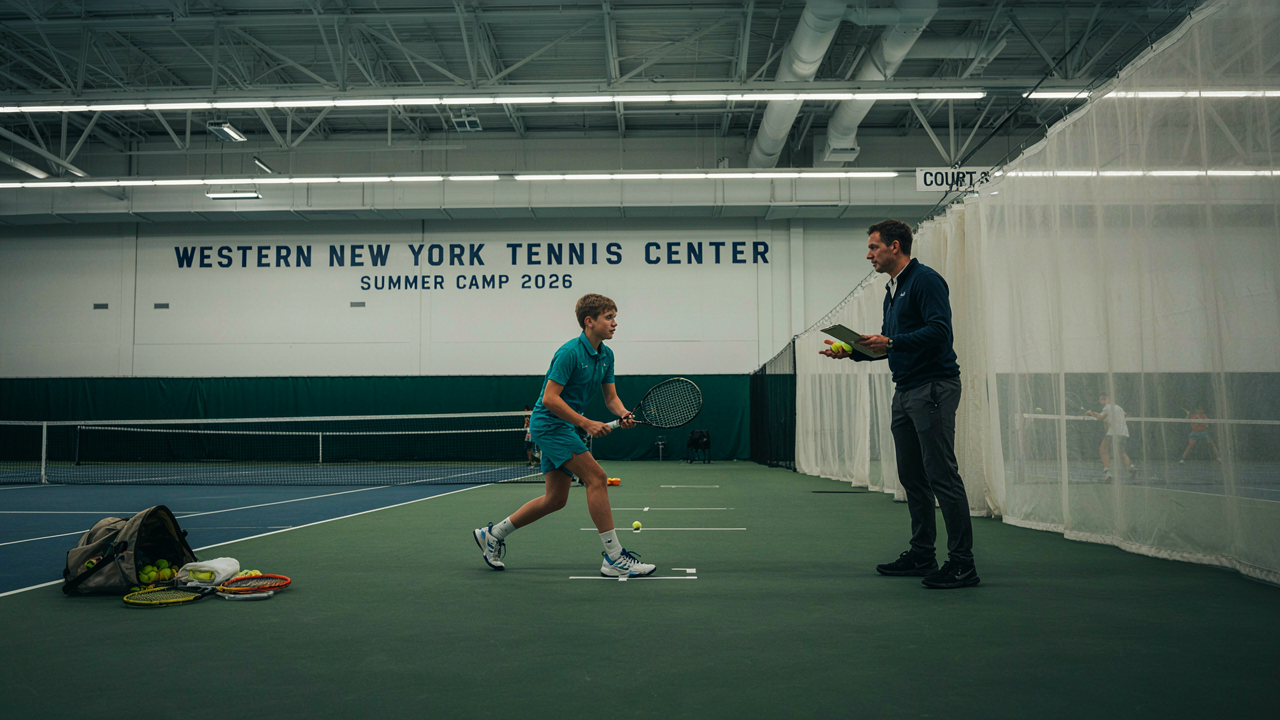
Improving at tennis takes more than simply hitting balls over the net. Players need to develop reliable technique, understand how to construct points, make decisions under pressure, and learn how to respond when a match does not go according to plan. While individual lessons can provide valuable instruction, group tennis training offers another important advantage: the opportunity to practice skills in situations that feel much closer to real competition.
For beginners, developing tennis skills in a group can make learning more engaging and less intimidating. For experienced players, regular group sessions can create valuable opportunities for competitive drills, strategic practice, and match play. When structured properly, training with other players can help bridge the gap between practicing individual shots and successfully using those shots during a match.
1. Developing Tennis Skills Through Repetition
Strong tennis technique is built through consistent repetition. Players need opportunities to practice forehands, backhands, serves, returns, volleys, movement patterns, and other fundamental skills until they become more natural.
Group tennis training creates a setting where these skills can be practiced repeatedly through organized drills. Instead of simply hitting the same shot from the same position, players can work through different situations. A coach may have players alternate between crosscourt and down-the-line shots, approach the net after a groundstroke, or respond to different types of serves.
This variety is important because tennis rarely gives players the exact same ball twice. Training in different patterns helps players become more adaptable while reinforcing sound technique.
For developing tennis skills, consistency matters. Regular group sessions provide a structured environment where players can continue building their fundamentals while gradually adding more challenging situations.
2. Learning From Different Playing Styles
One of the biggest advantages of training with other players is exposure to different styles of play.
Every tennis player has unique strengths. One may hit with heavy topspin, another may prefer flatter shots, while another might rely on speed and consistency. Some players attack the net frequently, while others are comfortable staying near the baseline.
Practicing against different opponents helps players learn how to adjust.
A player who normally practices against similar shots may discover that a higher, slower ball requires different footwork and timing. Another opponent might force the player to handle greater pace or change direction more quickly.
These experiences encourage players to observe what is happening on the court rather than automatically repeating the same response. Over time, this can improve shot selection, anticipation, and tactical awareness.
3. Turning Practice Into Tennis Match-Play Practice
There is an important difference between hitting a good shot during a drill and executing that shot when the score matters.
Tennis match-play practice helps players make that transition. Group sessions can include point-based games, serve-and-return situations, tie-break simulations, approach-and-volley exercises, and short competitive sets.
These activities introduce elements that are difficult to recreate through isolated technical drills.
Players must decide where to serve, when to attack, when to defend, and how much risk to take. They also have to recover between points and maintain concentration after mistakes.
This type of practice helps players understand that successful tennis is not only about producing technically correct shots. It is also about choosing the right shot at the right time.
4. Improving Decision-Making Under Pressure
Decision-making becomes increasingly important as players progress.
During a relaxed hitting session, a player might attempt a difficult shot without worrying about the consequences. During a competitive point, the same decision can have a very different outcome.
Group training can introduce controlled pressure through scoring systems and competitive drills. For example, players might earn extra points for successfully attacking a short ball or completing a specific tactical pattern.
These situations encourage players to think while moving.
Instead of asking only, “Can I hit this shot?” players begin considering questions such as, “Where is my opponent positioned?” “Should I attack or defend?” and “What is the safest way to start the next point?”
Repeated exposure to these decisions can make match situations feel more familiar.
5. Building Confidence Through Competitive Repetition
Confidence in tennis usually develops from experience rather than simply being told to feel confident.
A player who regularly practices serves, returns, rallies, and point situations with other players gets more opportunities to experience both successful and unsuccessful moments. That repetition can make competition feel less unfamiliar.
Group tennis training also provides a supportive environment where players can learn from mistakes. Missing a shot during practice is not the end of the point or the session. Instead, it becomes feedback that can help the player adjust.
As players become comfortable competing against different opponents, they can also become more comfortable adapting their game when conditions change.
For younger players especially, this can make training enjoyable while helping them develop a healthier approach to competition.
6. Why Consistent Group Training Matters
The benefits of group training become more noticeable when practice is consistent.
A single session can introduce a new skill, but regular training gives players time to reinforce it, test it, identify weaknesses, and make adjustments. Coaches can gradually increase the difficulty of drills as players become more comfortable.
A well-designed program can combine technical development with movement, strategy, competitive games, and match situations. This creates a more complete training experience than focusing exclusively on one part of the game.
Group training can also add a social element to tennis. Players get to practice with others who have similar goals, which can make it easier to stay motivated and committed to regular court time.
Bringing Skills From Practice Into Competition
The ultimate goal of tennis training is to help players perform more effectively when points matter. Developing tennis skills provides the technical foundation, while tennis match-play practice helps players learn how to apply those skills in realistic situations.
Group tennis training brings these elements together by combining instruction, repetition, different playing styles, competitive drills, and practical match experience.
Whether a player is learning the fundamentals or preparing for more competitive tennis, practicing with others can provide valuable challenges that encourage continued growth. With consistent coaching and purposeful practice, players can develop not only better strokes but also stronger decision-making, adaptability, and confidence on the court.
For players looking to make their practice more engaging and develop skills that transfer directly into match situations, structured group training can be an important part of a well-rounded tennis development plan.


