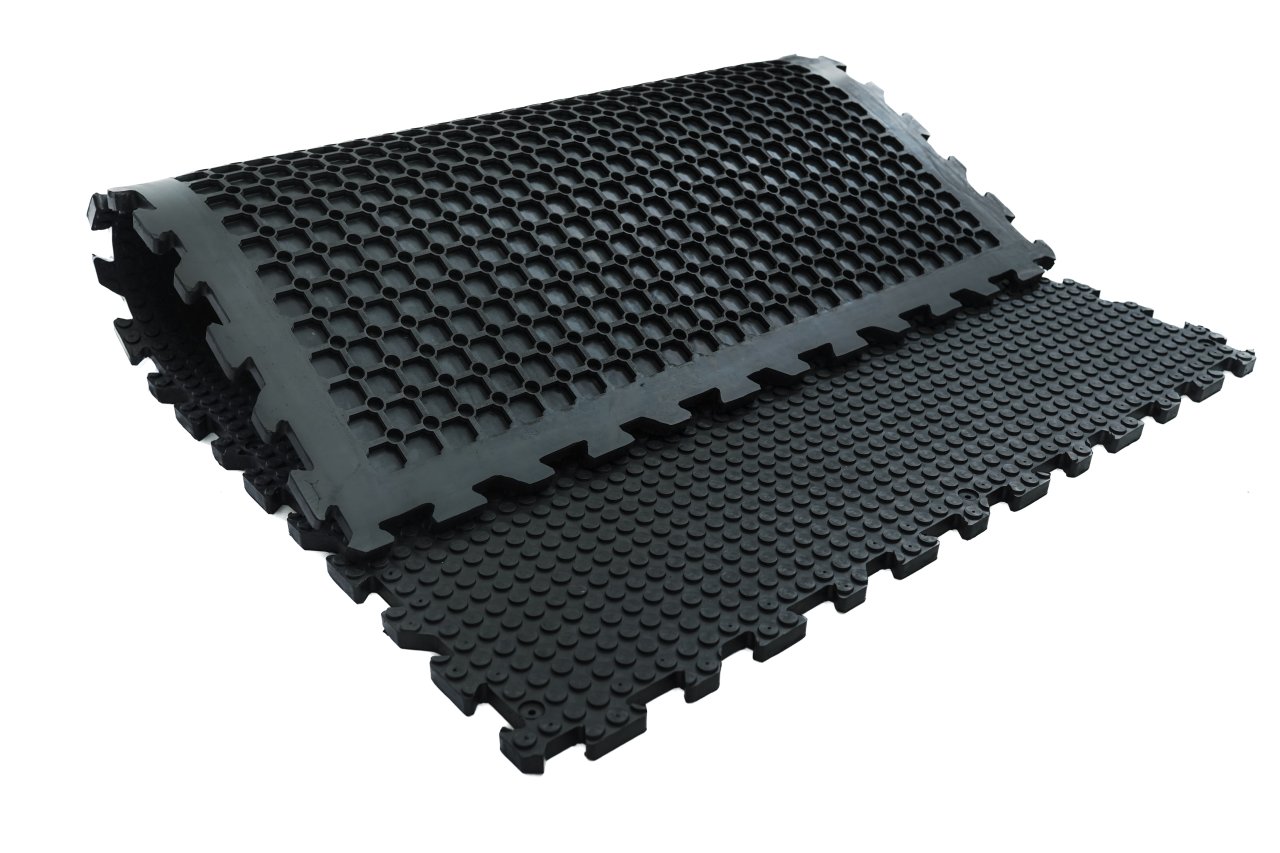
Anyone who has run a dairy operation for more than a season knows that flooring isn't a cosmetic decision — it directly affects animal health, milk yield, and how many years your barn infrastructure lasts before needing repair. Rubber mats for dairy farms have become the standard flooring solution across modern dairy farms, but not all mats are built for the same conditions, and choosing the wrong one can cost more in vet bills and replacement cycles than it saves upfront.
Why Bare Concrete Isn't Enough
Concrete flooring is durable and easy to clean, but it's also hard, cold, and slippery when wet — a combination that leads to a measurable rise in lameness, hoof injuries, and joint stress in dairy cattle. Cows standing or lying on unforgiving concrete for extended periods also show reduced lying time, which research has consistently linked to lower milk production. Rubber mats address this by adding cushioning and grip without sacrificing the durability concrete floors are chosen for in the first place.
What to Look for in Farm-Grade Rubber Mats
1. Slip resistance under wet, manure-heavy conditions. A dairy barn floor is rarely dry. Mats need a textured or grooved surface that maintains traction even when wet, reducing the risk of slips during milking, feeding, and general herd movement.
2. Cushioning that supports hoof and joint health. A mat that's too thin offers little benefit over bare concrete, while a well-cushioned mat reduces pressure on hooves and joints, which matters most in high-traffic areas like milking parlors, holding pens, and walkways.
3. Durability against constant moisture and cleaning chemicals. Farm flooring is exposed to manure, urine, water, and regular chemical washdowns. Mats need to resist degradation, cracking, and curling at the edges under this kind of repeated exposure — a common failure point in lower-grade rubber.
4. Interlocking or secure-fit installation. Loose mats that shift underfoot create a hazard rather than solving one. Look for interlocking designs or mats specifically engineered to stay flat and in place under constant animal traffic.
5. Application-specific thickness. Milking parlors, walkways, holding areas, and stall flooring don't all need the same mat specification — thicker, heavier-duty mats generally suit high-pressure standing areas, while other zones may prioritize easy cleaning and moderate cushioning.
The Cost Question
Farm-grade rubber matting is a genuine investment, and it's tempting to default to the cheapest option per square foot. But mats that degrade quickly under manure exposure or don't hold traction end up being replaced sooner, and the hidden cost of poor flooring — lameness treatment, reduced milk yield, lost productive cow-days — usually outweighs the difference in upfront mat pricing many times over.
For a look at what farm-specific rubber matting specifications should include — covering grip, cushioning, and durability designed for equine and dairy farm environments — Vikas Rubber Mats' farm and equine flooring range is a useful reference point when comparing options from different suppliers.
Final Thought
Good dairy farm flooring is invisible when it's working — it just quietly reduces injuries, supports better lying and standing behavior, and holds up to years of heavy use. The mistake most new dairy operators make is treating mat selection as an afterthought rather than a core infrastructure decision with a direct line to herd health and productivity.