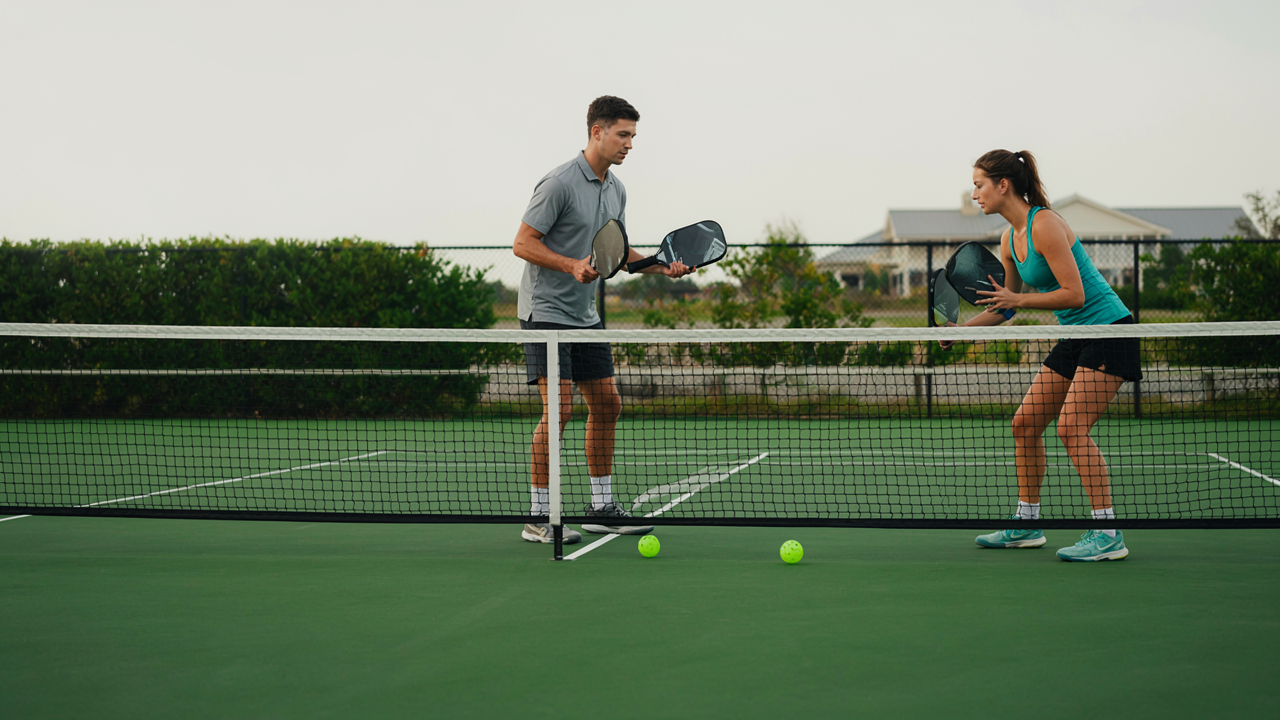
Tennis players often find that pickleball feels familiar from the first time they step onto the court. Both sports involve timing, footwork, shot placement, strategy, and quick reactions. However, while tennis experience provides a valuable head start, the smaller court, solid paddle, and different ball characteristics make pickleball a sport of its own.
For players transitioning from tennis to pickleball, the biggest challenge is not learning everything from scratch. It is understanding which existing skills transfer naturally and which habits need to change. With a few adjustments, tennis players can use their athletic background to become more confident and effective pickleball players.
1. Which Tennis Skills Transfer to Pickleball?
Many fundamental tennis skills remain useful when switching to pickleball. Good hand-eye coordination, anticipation, balance, and an understanding of angles can help players read the game and react quickly. Tennis players also tend to understand court positioning, shot selection, and the importance of moving opponents away from comfortable positions.
Footwork is another major advantage. Staying balanced, recovering after shots, and preparing early are valuable in both sports. Experienced tennis players often recognize patterns in an opponent's movement and can use that knowledge to make smarter decisions.
However, the smaller pickleball court changes how these skills are applied. Players have less distance to cover, rallies can accelerate quickly near the net, and controlled placement often matters more than hitting with maximum power.
The goal is to preserve your strongest tennis fundamentals while learning how to apply them to a different playing environment.
2. Why Tennis Strokes Need Adjustment
One of the most important changes involves stroke mechanics. Tennis rackets have longer handles, larger hitting areas, and strings that help generate spin and power. Pickleball paddles have a solid hitting surface, so players must learn to create effective shots through controlled paddle movement, contact, and positioning.
Large tennis swings can become a disadvantage, particularly during fast exchanges at the kitchen line. A full backswing may leave too little time to react to a quick volley. Instead, compact strokes and a stable paddle face allow players to respond efficiently.
Grip pressure also matters. Holding the paddle too tightly can restrict wrist movement and reduce feel, especially during delicate shots. A relaxed but secure grip helps maintain control without sacrificing responsiveness.
When practicing tennis techniques in pickleball, focus on simplifying your movements rather than reproducing every tennis stroke exactly. Shorter swings, earlier preparation, and a consistent contact point can make a noticeable difference.
3. Serving, Groundstrokes, and Volleys: What Changes?
Serving is an immediate adjustment for tennis players. Pickleball uses an underhand volley serve or a permitted drop serve, subject to the applicable rules. The serve must follow pickleball's requirements, so tennis players cannot simply use their usual overhead serve. A legal serve is the starting point for developing a reliable serving routine.
Groundstrokes also require a different approach. Powerful forehands and backhands can be useful when the opportunity is right, but hitting every ball aggressively can lead to unforced errors. Aim for controlled depth, sensible angles, and shots that make the opponent move.
Volleys require particular attention. Tennis players who are comfortable attacking the net may initially rely on force instead of control. In pickleball, a short punch volley with a steady paddle face can be more effective than a large swinging motion. Keeping the paddle in front of the body also helps players handle fast exchanges.
The key is to develop a versatile shot selection. Use pace when it creates an advantage, but choose placement and consistency when the situation calls for them.
4. Mastering the Kitchen Line and Soft Game
The non-volley zone, commonly called the kitchen, is one of pickleball's defining features. Players cannot volley the ball while touching the kitchen or its line, including when their momentum carries them into the zone after a volley.
This rule changes traditional tennis net-play habits. In tennis, moving close to the net can create opportunities to finish points with aggressive volleys. In pickleball, players must combine careful positioning with patience and touch.
Dinking is an essential skill to learn. A dink is a soft shot that lands in the opponent's kitchen, forcing them to respond with control rather than power. Tennis players accustomed to hitting through the ball may initially struggle to reduce their swing and absorb pace.
Practice gentle forehand and backhand dinks, keeping your paddle stable and using small movements. Learn to recognize when an opponent's shot sits up high enough to attack and when it is better to return another controlled dink.
Developing this soft game can help tennis players become more tactically complete instead of relying exclusively on their power.
5. Adjusting Your Paddle Technique for Better Control
Successful adjusting your paddle technique starts with understanding that control is a skill, not simply a lighter version of a tennis stroke. Paddle angle, contact point, grip pressure, and swing length all influence where the ball travels.
Begin with simple drills. Rally gently with a partner, practice dinks from the kitchen line, and alternate between forehand and backhand blocks. Focus on making clean contact and keeping the ball low rather than trying to win every practice exchange.
Next, work on resets. A reset is a controlled shot that helps slow down a fast rally, often by sending the ball softly into the kitchen. It can turn a defensive position into a more neutral one. Tennis players who learn to absorb pace instead of automatically returning it aggressively often improve their consistency.
Finally, practice changing direction without exaggerating your swing. Small adjustments to paddle angle and contact can produce useful changes in placement. Record your progress by tracking how often you keep the ball in play and execute the intended shot, rather than measuring success only by winners.
6. Build a Pickleball Game Around Your Tennis Experience
The fastest way to improve is to combine your existing strengths with pickleball-specific practice. Start with the skills you already possess, then identify the habits that cause the most errors.
If your tennis background gives you strong groundstrokes, practice using them selectively. If you have excellent reflexes, develop quick blocks and counterattacks at the kitchen line. If you understand strategy, apply that knowledge to patient dink rallies and smart shot selection.
Playing with experienced pickleball players can also accelerate your learning. Observe their positioning, shot choices, and ability to transition from defense to attack. Consider taking a beginner or intermediate lesson to receive feedback on your paddle mechanics and court movement.
At WNY Tennis, players can continue developing their racket-sport skills while exploring the techniques and strategies that make pickleball unique. Whether you are a competitive tennis player or a recreational player looking for something new, a willingness to adapt will help you enjoy the transition.
Final Thoughts
Tennis players can bring many valuable techniques to pickleball, but success comes from knowing when to modify them. Footwork, anticipation, coordination, and strategic thinking provide a strong foundation. Compact strokes, controlled dinks, legal serving mechanics, and smart kitchen-line positioning help turn that foundation into an effective pickleball game.
Rather than trying to play pickleball exactly like tennis, focus on understanding the differences and developing skills that suit the paddle, court, and pace of play. With regular practice and an open mind, your tennis experience can become a genuine advantage on the pickleball court.